
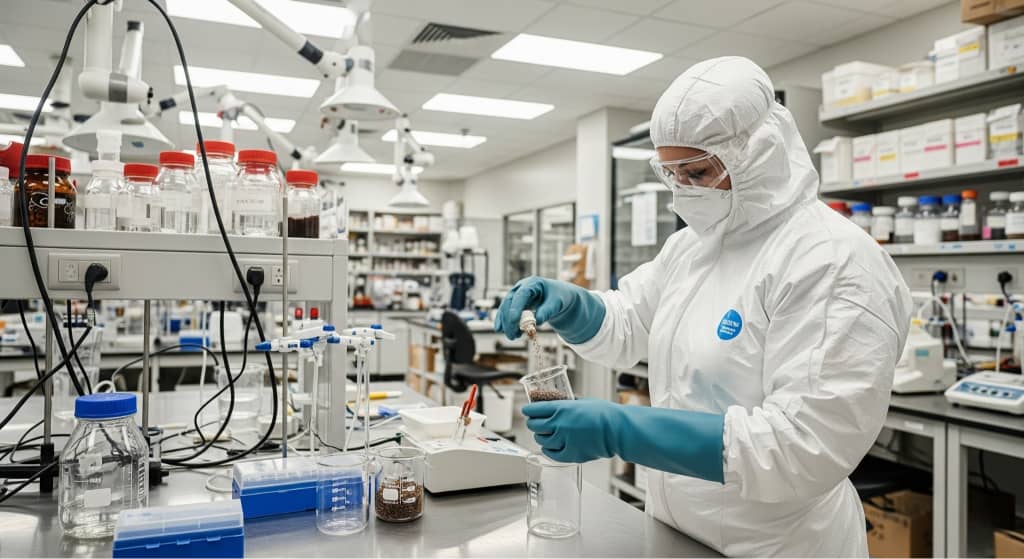

Millions of tons of shellfish waste are repurposed into valuable biopolymers with repeatable industrial precision in the process of chitin extraction.
This naturally occurring polymer, which comprises 20-40% of shellfish waste, including crab shells, shrimp carapaces, and lobster carapaces, is subjected to a methodical process of deproteinization and demineralization in order to obtain chitin of pharmaceutical, agrochemical, and industrial quality.
The chitin market is a global one with a value upwards of $5.01 billion per annum, projected to reach $13.12 billion by 2031, and is dependent on rapid extraction methods to convert seafood processing waste into a high-value commodity.
Knowing these extraction processes shows one way modern biotechnology turns otherwise discarded shells into humble materials found in everything from wound dressings to water filters.
Fresh On Time Seafood has recognized this opportunity and established itself as a leader in transforming shellfish waste into high-value chitin products.
Founded by Bintarna Tardy in 2004, Fresh On Time Seafood is a respected international processor and supplier of quality seafood and chitosan products produced from crab shell.
Our sustainable and disruptive solution is applied across multiple industries, from food to healthcare, cosmetics, agriculture, and water treatment. We are dedicated to providing quality, value, and reliability and keeping the needs of our customers first.
Chitin Explained: The Basics of Extraction
What Is Chitin?
Chitin is the second most plentiful natural polymer that exists on our planet after cellulose. This wondrous biopolymer is the actual structural material of the exoskeletons of arthropods– from tiny zooplankton to king crabs– and hence provides the stiffness and strength of crab keratin.
Molecular Structure and Properties
The molecular architecture of chitin is composed of N-acetylglucosamine units linked with β-1,4-glycosidic bonds.
The result is a crystalline polymer with excellent mechanical properties, which is highly resistant to chemical degradation and durable enough to be used for protective exoskeletons.
Natural Composition in Shellfish
In the real shells of natural shellfish, chitin is presented in the form of a complex of biopolymers that are cross-linked with proteins, calcium carbonate, and other minerals.
This mixture is too complicated, and sophisticated extraction technology is needed to extract pure chitin samples and retain their advantages.
The relative proportion of these components differs greatly among species, and crab shells contain about 20-40% chitin, 30–40% calcium carbonate, and 20–35% proteins.
Species Variations and Yield Differences
Different kinds of shellfish give different chitin yields and quality properties. Crab shells are generally the richest source of chitin, and shrimp shells are relatively easy to process due to their thinness.
The lobster shells, as enriched with chitin, however, require a more severe process because they are also rich in minerals.
For commercial operations, working with an experienced chitosan supplier ensures access to high-quality raw materials that have been properly processed according to these species-specific requirements.
Crystalline Forms of Chitin
Chitin has three polymorphic forms with different crystalline structures, which are α-chitin, β-chitin, and γ-chitin.
Containing antiparallel chain arrangements, which induce strong intermolecular hydrogen bonds with adjacent molecules, α-chitin is the predominant form in the shells of crabs and shrimps.
This material possesses very good mechanical properties, but because the extraction has to be carried out more harshly.
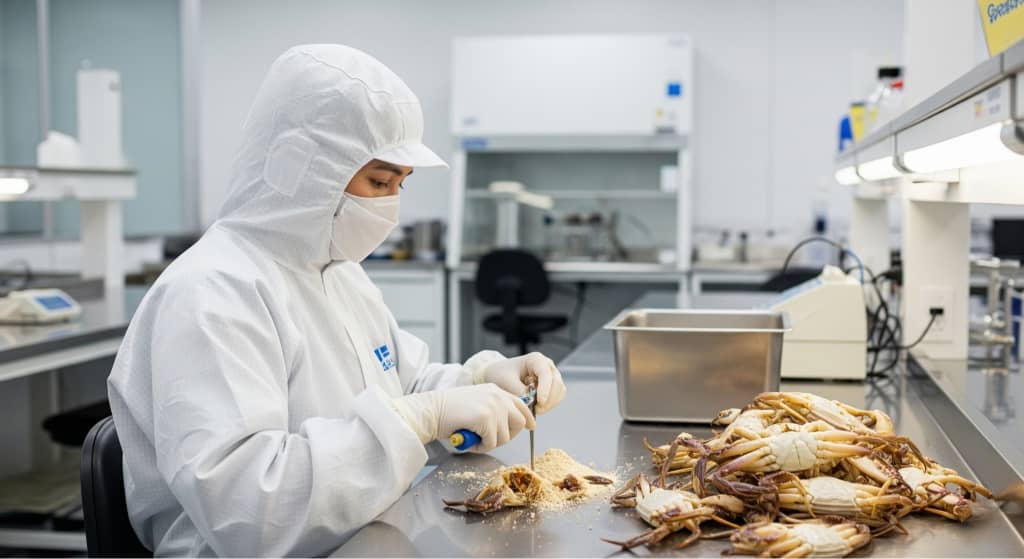
5 Critical Prep Steps Every Chitin Manufacturer Must Get Right
Collection and Storage Requirements
Efficient derivation of chitin relies on excellent handling of the raw material prior to extraction.
Better-quality chitin is obtained when recovery is conducted from fresh rather than stale shellfish wastes, where decomposition can cause degradation of the polymer structure or introduction of impurities that further complicate the extraction process.
Shellfish waste should be collected and stored as soon as possible in order to avoid the growth of bacteria and enzymatic degradation.
Shucking houses usually use cold storage facilities, typically maintaining temperatures less than 4°C in order to maintain the shell integrity. Flash-freezing techniques are also used by some operations to minimize all further decomposition.
Shell Cleaning and Preparation
To clean the shells, they can be washed out to remove meat residues, sand, and debris. Industrial washing systems typically utilize rotating drums at high speeds, along with water jets that blast stains away.
Such a step is critical to avoid contamination of the structure during chemistries that follow.
Size Reduction and Particle Optimization
Once cleaned, the shells are comminuted using either a hammer mill or a cutting machine and sieved to obtain particle sizes between 2 and 5mm. The ideal particle size combines the processing efficiency and the extraction efficiency.
Smaller particles provide more surface area for chemical reactions but may result in handling problems during filtration.
Quality Assessment Parameters
The testing of the raw materials, which includes determination of moisture content, protein content, and ash content, was in fact a quality control test. These criteria have a direct effect on process conditions and chemical consumption.
If the shells are too moist, they must be pre-dried; if the protein of the dried shells is too high in boldine extraction, there ought to be longer deproteinization steps.
Seasonal Variations and Their Impact
There are seasonal changes in the nutrient content of shells, and these affect some of the extract parameters. Shells harvested in molting seasons are wetter and lower in mineral content, and processing conditions must be modified for them.
Experienced processors often keep detailed records about what works best in any given season to get the most out of extraction procedures during the changing seasons.
Is chitin good or bad?
Chitin is generally considered good for health, especially as a source of dietary fiber. It supports the growth of beneficial gut bacteria and may help improve digestion and immunity. Because it’s slowly digested, it can reach deeper parts of the colon, offering extended benefits. However, people with shellfish allergies should avoid it, as it may cause allergic reactions.
Deproteinization: The First Critical Step
Process Overview and Importance
The first big extraction step is to get (slightly) purified chitin: “Deproteinization” refers to the removal of proteins entrapped within the chitin matrix.
This step is generally carried out with strong alkaline solutions, most frequently hydroxide alkalies, such as sodium hydroxide (NaOH), for the purpose of hydrolyzing protein bonds and solubilizing the components of the proteins.
Operating Conditions and Parameters
Deproteinization is performed under very specific conditions to optimize the removal of proteins from the chitin structures. The treatment is generally carried out at a temperature between 80°-100°C, for a time of 2-6 hours, depending on the chemical composition of the shell and the degree of purity being sought.
Chemical Concentration Requirements
The best deproteinization level for most shellfish can be achieved using 2-5% sodium hydroxide.
Increased concentration leads to more rapid protein removal, but chitin could be degraded, while lower concentration leads to incomplete protein extraction. The best concentration depends on the shell species, particle size, and processing temperature.
Mixing and Agitation Systems
In such a case, constant stirring during deproteinization allows uniform chemical interaction and avoids spots where chitin is degraded. Agitation in reactors on an industrial scale is ensured during the entire treatment time by the use of mechanical stirrers or the use of recirculation pumps.
Byproduct Recovery and Utilization
The deproteinization process results in a protein-concentrated alkaline extract, which must be disposed of and dealt with.
This preparation contains precious amino acids and peptides, which can be recovered by means of neutralization and precipitation methods. Many facilities capture these proteins for potential use in animal feed or for fertilizer applications.
Fresh on Time Seafood as an established chitosan supplier often partners with agricultural companies to create additional revenue streams from these valuable byproducts, demonstrating the circular economy principles in action.
Process Monitoring and Control
pH Monitoring Systems
pH indicators during the deproteinization offer real- time reaction monitoring. The initial pH is 12-13 but is reduced as solubilization of the proteins takes place and neutralization is achieved.
The optimal pH ranges allow us to achieve a complete protein extraction without significant chitin degradation.
Temperature Control Requirements
Deproteinization must be maintained within carefully controlled temperature limits. Too high a temperature speeds up the chitin degradation process; however, the low temperature does not lead to a full protein removal.
Modern processing facilities commonly use automated temperature control systems.
Multi-Cycle Processing
Several deproteinization cycles may be required for highly proteinaceous shells or when very pure chitin is desired. The alkaline solution used in each cycle is new, and the dissolved proteins are removed after every four cycles by washing and not redopositing on the chitin surfaces.

Demineralization: Removing Calcium Carbonate
Process Fundamentals
Demineralization occurs upon deproteinization, which is devoted to calcium carbonate and other minerals accounting for 30-50% of the weight of shellfish shell. This method uses acid, generally hydrochloric acid (HCl), to dissolve mineral parts, and chitin is kept.
Reaction Chemistry and Kinetics
The demineralizing action takes place rather quickly, with dissolution of the calcium carbonate yielding carbon dioxide gas and calcium chloride solution.
It is an exothermic reaction; therefore, the temperature must be closely monitored in order to avoid chitin degradation.
Acid Concentration Optimization
Demineralization is efficient for most applications with hydrochloric acid strengths in the range of 1-3%.
At higher concentrations, mineral dissolution is enhanced, but the risk of chitin degradation and handling dangers are elevated. Lesser concentrations prolong treatment times and can cause incomplete mineral elimination.
Gas Evolution Management
The demineralization is closely followed by reaction rates and gas evolution. Fast generation of carbon dioxide can lead to too much foaming and make it hard to maneuver. The controlled addition of acid and appropriate ventilation systems easily mitigate these problems.
Process Control Parameters
Temperature Management
During demineralization and temperature control, the reaction temperature is generally kept below 40°C so as to prevent degradation of chitin.
The exothermic enthalpy of the acid-carbonate reaction necessitates the presence of a cool or cooling jacket in many cases, particularly in the production of large amounts.
Reaction Time Optimization
The time for etching for demineralization ranges from about 1 hour to about 4 hours, depending on shell type and acid concentration.
Crab shells having high mineral content need longer demineralization time compared to shrimp shells and take about 1-2 h for complete demineralization.
Mineral Recovery and Waste Management
The demineralizing solution is enriched in dissolved calcium and other cations that can be precipitated, or grown, in solid or crystal form. Recovering calcium chloride offers secondary uses and a cost-saving alternative to waste treatment.
Process Monitoring Techniques
pH Tracking Systems
During demineralization, pH monitoring accompanies the progress and completion of the reaction. Initial pHs tend to be in the 3-5 range and increase with depletion of acid by reactivity with minerals. A final pH above 2 usually represents partial demineralization.
Multi-Stage Processing
Shells of very high mineral content or the production of ultrapure chitin might demand several demineralization cycles. Fresh acid solution is used every cycle, and between cycles the solution is washed with water to dissolve any minerals and to prevent precipitation on the chitin.
Advanced Purification Techniques
Enzyme Treatment Methods
Advanced Purification Technologies is able to provide a higher purity above and beyond this level to meet the demand for pharmaceuticals and high- value applications.
These methods are developed based on the simple extraction method but aim to completely eliminate the residual contaminants for high- quality products.
Protease Applications
One advanced purification method is enzyme treatment using specific proteases to eliminate the remaining proteins that are resistant to alkaline treatment. They work under gentle conditions, which allow the chitin to remain intact while achieving good protein removal.
In general, protease treatment involves treating said fermented emulsion with protease, such as pepsin, trypsin, or specified bacterial protease, and the like, in a controlled pH and temperature. Treatment times are between 2 to 12 hours for different enzymes and purity levels.
Solvent Extraction Procedures
Sinus extraction procedures remove lipid and other organic impurities that might have been left behind through standard processing.
These materials could be efficiently removed by treatments with ethanol or isopropanol, while the chitin structures remained and were preserved.
Bleaching and Color Removal
Bleaching treatment removes color compounds and enhances product appearance for applications of chitin that require white or colorless material. For bleaching, a treatment of hydrogen peroxide or sodium hypochlorite is effective when taking place in controlled conditions.
Emerging Technologies
Ultrasonic Treatment
Ultrasonic vibration increases the extraction rate by generating cavitation which causes the collapse of cell structure and penetration of the chemical components.
The method minimizes the process time and maximizes the yield of the extraction.
Microwave-Assisted Extraction
MAE uses electromagnetic energy to trigger chemical reactions and promote more efficient extraction. This process yields shorter processing times and high product quality.
High-Pressure Processing
Hydrostatic pressure steps up extraction rates and increases purity. Hydrostatic extractions allow for the use of higher pressure to maximize the efficiency of the extraction process.
These techniques offer potential for decreasing the chemicals and still achieving good extraction.
Membrane Filtration Systems
Final purification is accomplished with membrane filtration systems, which can remove the last of any remaining contaminants due to differences in molecular size.
The art of ultrafiltration and microfiltration has enabled a knife-edge division for the first time.
Quality Control and Testing Methods
Chemical Composition Analysis
Strict quality control guarantees that extracted chitin meets requirements for desired applications. Testing protocols test for chemical makeup, physical strength, presence of contaminants, and degrees of drying in the extraction process.
Degree of Deacetylation Measurement
Determination of degree of deacetylation The extent of removal of acetyl groups is a key factor for many applications. Infrared spectroscopy is a fast, precise method to determine this vital parameter.
Molecular Weight Determination
Gel permeation chromatography or viscometer measurements are used to determine the molecular weight and distribution of polymer chains. These affect the mechanical properties and performance in applications.
Purity Testing Protocols
Ash Content Analysis
The ash content analysis measures the minerals retained on extraction. Conventional burnouts at 600°C deliver precise ash values for use in quality control.
Protein Content Testing
Protein determination tests for full deproteinization and purity according to stated values. Protein measurement The Kjeldahl nitrogen or spectrophotometric methods are used for accurate determination of protein.
Moisture Content Determination
Water content is determined using either the gravimetric method or Karl Fischer titration to measure the water content. Right moisture enhances stability and prevents the growth of bacteria.
Physical Property Characterization
Particle Size Analysis
Particle size analysis defines the physical appearance of the extracted chitin and maintains its uniformity in further processing. Laser diffraction and sieve diameter are both reliable measures of size distribution.
Viscosity Measurements
Viscosity measurement is then used to characterize the solution behavior upon dissolution of chitin in selected solvent types. These measurements pertain to the molecular weight and chain soundness.
What does chitin do to the human body?
Chitin is a natural fiber that can support gut health by acting as a prebiotic, helping feed beneficial bacteria in the digestive system. Although humans can’t fully digest chitin, certain enzymes in the body, like chitinase, can break it down to some extent. It may also help regulate immune responses by interacting with immune cells in the gut. However, research on its full effects in humans is still ongoing.
Safety and Contamination Testing
Microbiological Testing
Auditing bacteria testing ensures no pathogenic bacteria and the product’s safety. Microbiological quality is supported by standard plate count procedures and specific pathogen testing procedures.
Heavy Metal Analysis
Metal testing, such as heavy metal testing, screens for poisonous metal leached into the product as well as impurities in processing equipment that could contribute to metal contamination. Atomic absorption offers high sensitivity of detection.
Environmental Considerations and Sustainability
Waste Minimization Strategies
Concern for the environment compels contemporary chitin extraction plants to be as clean as possible to reduce waste and maximize efficiency. Sustainable practices are applied to reduce waste, energy, and chemical use in the course of the extraction.
Process Optimization
Waste minimization approaches, depending on source/sink considerations, minimize chemical use and maximize the recovery of valuable co-products. Debottlenecking improves the extraction efficiency and product quality while the chemical consumption is reduced.
Chemical Recovery Systems
Chemical recovery systems recover and recycle processing chemicals, which can cut costs and pollution. Distillation and/or ion exchange recovery of acid and base is highly economical and environmentally friendly.
Fresh on Time Seafood, as a leading chitosan manufacturer, has invested heavily in these recovery technologies, not only to reduce environmental impact but also to maintain competitive pricing in the global market.
Water Management and Treatment
Wastewater Treatment Systems
Treatment of all liquid effluents to acceptable environmental discharge standards in wastewater treatment systems. Biological processes, chemical addition, and membrane separation accomplish the required treatment.
Closed-Loop Water Systems
Closed circulatory water loops reduce the demand for freshwater by reducing the requirement for incoming water supply using treated process water. Such systems save both water usage and wastewater generation.
Energy Efficiency and Carbon Reduction
Heat Recovery Systems
Increased energy efficiency decreases the CO₂ footprint for the extraction. Heat recovery systems capture waste heat from processing steps and reinject it into other processing steps.
Carbon Footprint Reduction
Energy- related options follow the energy efficiency of measures, the use of renewable energy, and process optimization. These initiatives support a holistic approach to sustainability.
Byproduct Utilization and Circular Economy
Value-Added Recovery
By-product recovery converts wastes into saleable products and generates extra income while diminishing waste disposal expenditures. The recovered proteins are utilized in animal feed, fertilizers, and biochemical- based applications.
Fresh on Time Seafood, as a professional chitosan manufacturer, recognizes that maximizing byproduct utilization is essential for maintaining profitability while meeting increasingly stringent environmental regulations.
Environmental Assessment and Green Chemistry
Life Cycle Assessment
Life cycle assessment (LCA) of chitin extraction processes. The environmental impacts of chitin extraction processes are assessed by LCA methodologies. They serve as assessments on where improvements can be made and advice for sustainability actions.
Green Chemistry Principles
Extraction processes (of winemaking) Green chemistry principles direct new sustainable extraction methods. Alternative solvents and bio-based extraction processes appear to be promising in terms of alleviating the concerns for the environment.
Quality Assurance and Standardization
Documentation and Procedures
Well-established quality control procedures guarantee product quality while meeting customer’s specifications. Traceability and regulatory compliance are ensured with standardized procedures and documentation formats.
Standard Operating Procedures
SOPs describe all processing steps and quality control. These operations guarantee that performance is uniform and offer training documentation for new operators.
Batch Documentation
Batch records detail all the conditions of processing and measures of quality of each lot of a production. These certifications lend themselves to traceability and customer quality demands.
Process Control and Monitoring
In-Process Monitoring
Quality monitoring ensures real-time traceability of vital properties during extraction. Instantaneous readout permits adjustment in the moment and precludes quality variation.
Statistical Process Control
The SPC systems (Statistical Processing Control) are used to determine the trends and deviations of the processing parameters. Process improvements and quality optimization are directed by control charts and statistical analysis.
Customer Support and Compliance
Certificate of Analysis
The certificates of analysis show quality details for each shipment of product. These documents verify that produced films meet customer and regulatory requirements.
Customer Complaint Handling
Serious customer complaints are processed, and reoccurrence of quality problems is avoided. Disciplinary and rectifying work processes keep our customers high praise of us high.
Equipment and Supplier Management
Calibration Programs
Modulation calibrations guarantee that all metrological tools and analytical devices are accurate. Routine calibration assures accuracy and supports conclusion of QA program.
Supplier Qualification
Supplier quality programs then verify to meet quality requirements that the incoming raw material meets. We have supplier chainslist and incoming stock testing to guarantee the same good quality material.
Continuous Improvement
Quality and efficiency improvements are sought and found in continuous improvement programs. Frequent inspections and improvement efforts lead to the constant fine-tuning of the process.
FAQ
What are the structure and unique properties of chitin?
- Deproteinization: The shells are treated with sodium hydroxide (NaOH) at high temperatures (80–100°C) to remove proteins.
- Demineralization: The residue is then treated with dilute hydrochloric acid (HCl) to dissolve calcium carbonate and minerals
Why is particle size important in chitin processing?
Smaller shell particles increase surface area, speeding up chemical reactions. However, extremely fine particles can cause filtration issues during processing.
What are the main types of chitin?
- α-chitin (strongest, most common in crabs/shrimp)
- β-chitin (more flexible, found in squid)
- γ-chitin (rare, mixed structure)
Is chitin biodegradable and eco-friendly?
Yes. Chitin breaks down naturally and does not pollute the environment, making it an ideal material for green technologies and circular economy solutions.