
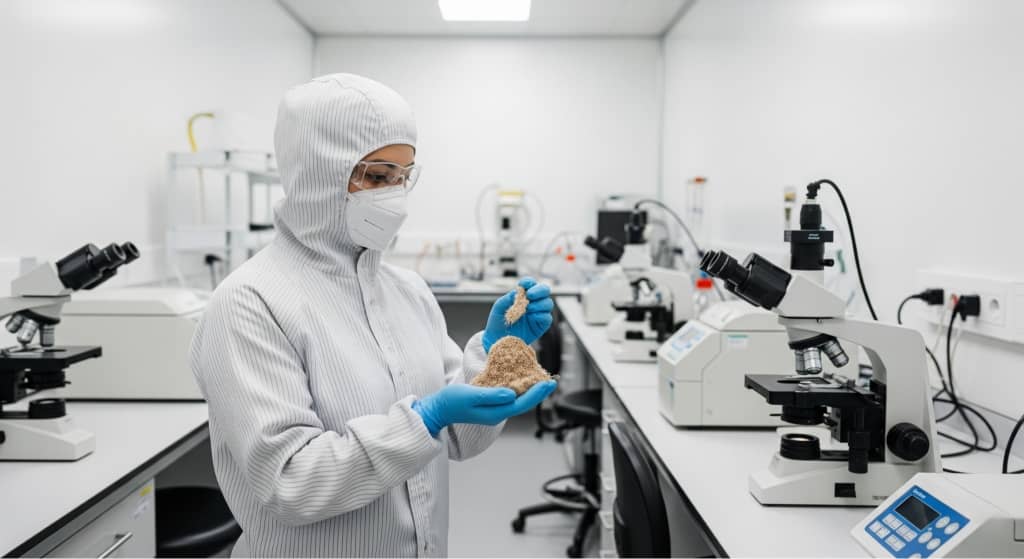
The reinforced consumer goods of tomorrow Whether you know it or not, chitin is reshaping American health care and manufacturing industries in ways that would have seemed unlikely even a decade ago.
This incredible biopolymer (which is mostly harvested from the shells of crustaceans that would otherwise clog up our landfills) is staking its claim at the dawn of a new era of biotechnology that blends ecological consciousness with state of the art invention.
The intersection of stewardship of the environment and cutting edge medical research has provided an unprecedented opportunity for American industry and researchers.
What processing facilities once discarded as worthless byproducts have emerged as a cornerstone resource for addressing some of America’s most pressing healthcare and manufacturing challenges?
This transformation is exemplified by innovative companies leading the charge in sustainable chitin utilization.
Founded by Bintarna Tardy in 2004, Fresh On Time Seafood is a respected international processor and supplier of quality seafood and chitosan products produced from crab shells.
Our sustainable and disruptive solution is applied across multiple industries, from food to healthcare, cosmetics, agriculture, and water treatment. We are dedicated to providing quality, value, and reliability and keeping the needs of our customers first.
These previously overlooked shell materials are now driving innovations across multiple sectors, from advanced wound care solutions to next generation drug delivery mechanisms.
The transformation extends beyond medical applications, encompassing sustainable production methods and revolutionary material development that spans the entire continental United States.
This remarkable evolution demonstrates how creative problem solving can convert industrial waste streams into valuable resources that benefit both human health and economic growth.
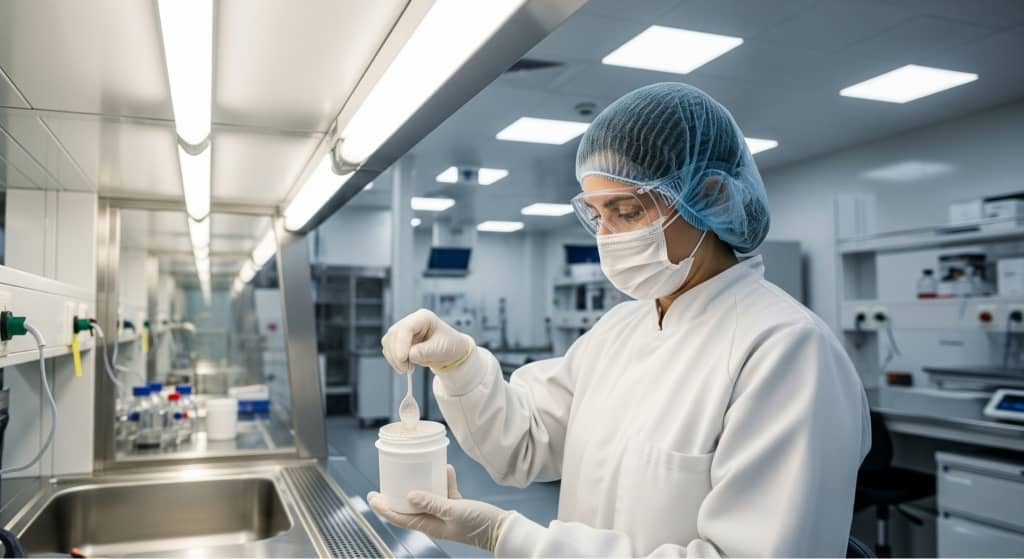
From Waste to High Value Biomaterial
Figuring out how to turn seafood processing waste into groundbreaking health care products may be among the most promising new trends in American biotechnology.
Each year globally, some 6-8 million tons of crustacean shell waste are produced, with the US contributing a significant portion.
Historically, this huge shell resource posed major disposal problems for Eastern Seaboard, Gulf Coast, and Pacific Northwest processors. The shells would be disposed of in a landfill, adding to the environmental load, or reprocessed into low value animal food additives.
But American companies with vision had already started to see the vast possibilities that lay beneath these discarded shells.
State of the art American facilities have even engineered advanced extraction processes to transform the raw chitin from the shells into ultra refined products that are suitable for medical and practical commercial use.
This includes a sequence of chemical treatment, purification, and quality control steps adapted to health care applications.
Now from Maine to California, companies are spending tens of millions of dollars on state of the art processing facilities that can produce pharma grade chitin from shrimp and crab shells at a yield above 85%, far better than the 40-50% that old school chitin production could boast.
Fresh On Time Seafood is one of the most well-known companies that has made this change. We have become one of the top chitosan suppliers by using our large seafood processing operations to make high quality biomaterials for the medical field.
The economic benefit should be considerably larger than just the price of the chitin harvested. Processing facilities are generating the kind of high skilled jobs in coastal communities that have historically relied on seasonal fishing industries.
Towns like Dutch Harbor, Alaska, and Eastport, Maine, are going through a boom as biotechnology companies set up shop to cash in on the supply of raw materials and the local workforce whose palate is trained on seafood processing.
There are large environmental implications of such a shift. Transforming waste streams into valuable products and significantly reducing the environmental footprint of seafood processing, all the while providing sustainable raw materials for essential applications.
Studies carried out by the Environmental Protection Agency (EPA) indicate that chitin extraction from refuse shells could reduce the total environmental impact by 67%, compared to the use of synthetic alternatives in the same application.
Is chitin good for the human body?
Chitin offers several health benefits as a natural dietary fiber that supports digestive health and weight management. It helps promote healthy gut bacteria, softens stool to prevent constipation, and creates a feeling of fullness that can aid in appetite control. Chitin also has natural antimicrobial properties that may support immune system function. As with any fiber, it’s best consumed gradually to allow your digestive system to adjust.
Diverse Sources of Chitin Production
However, crustacean shells are still the main resource of chitin for American industries, and innovative researchers and companies are investigating several different biological sources for chitin that could significantly increase supply and limit reliance on the shedding schedules of seasonal seafood processing.
Fungal Chitin Generation
Fungal chitin is another well researched potential source for alternative chitin production at American research facilities.
Fungal chitin is obtained throughout the year in a stable and scalable manner in controlled environments that crustacean based extraction is unable to achieve.
Colleges such as M.I.T. and Stanford are leading the way on cultivation techniques that utilize agricultural waste to grow fungi that yield high quality chitin.
The work of chitin extraction from wood decomposing fungi is concentrated in the Pacific Northwest (PNW), where wood resources are plentiful.
Businesses in Oregon and Washington are leading the charge to develop novel bioreactor designs capable of meeting these specifications to produce pharmaceutical grade fungal chitin having properties that, in some applications, are superior to traditional crustacean derived materials.
The controlled conditions of chitin production enable the detailed manipulation of chitin structure to create tailor made variants specific to different medical applications.
Alternative Biological Sources
Insect farming is a different frontier for American chitin production, with its own set of regulatory and cultural issues. Texas and California research facilities are working on extracting chitin from crickets and mealworms that have been specifically refined for this use.
Although still at an experimental stage, chitin derived from insects could be enormously scaled in quantities with relatively low environmental impact.
Other marine sources (apart from classical crustaceans) are also becoming more popular. The vast squid resources in the Gulf of Mexico give access to chitin from cephalopod sources that have peculiar properties for some applications.
Research at Gulf Coast marine biology stations discovered the variants of chitin in squid with higher biocompatibility for some medical and pharmaceutical applications.
Fresh On Time Seafood, which has been around for a while, is becoming a chitosan manufacturer and innovator in this new area of alternative sources.
Revolutionary Healthcare Applications
The use of chitin in American healthcare is a paradigm shift into biocompatible, sustainable medical answers for several of the present important issues of modern healthcare.
Advanced Wound Healing & Tissue Regeneration
American medical device companies are developing chitin based dressings much superior to conventional materials in CTS. These advanced dressings turn the natural antimicrobial power of chitin into a barrier to infection that also can help the body regenerate cells more quickly.
Clinical studies conducted by some of the nation’s leading medical centers, such as Johns Hopkins and the Cleveland Clinic, showed shorter healing times in comparison to traditional dressings by as much as 40%.
Due to the distinctive molecular structure of chitin, this material can directly interact with cellular repair and act as a scaffold that guides tissue response.

This characteristic is extraordinarily useful in the treatment of chronic wounds, diabetic ulcers, and surgical incisions, which have always had problems healing.
In the case of patients with immunodeficiency or impaired circulation, the use of chitin dressings has produced outstanding results.
More revolutionary are tissue engineering applications. U.S. scientists are developing chitin based bioengineered scaffolds for the growth of replacement organs and tissue.
These scaffolds slowly degrade as new, natural tissue fills in, so there’s no need for follow up surgeries to remove the support.
Drug Delivery Systems
The pharmaceutical industry is now focusing on chitin based DDS that provide unique targeting for specific organs or tissues like the liver, lung, kidney, etc.
American biotech firms have invented microspheres made of chitin that can store drugs and allow their controlled release over long periods, depending on the treatment.
In the case of cancer treatments, this technology is especially important, as traditional chemotherapy damages healthy cells as well as cancerous ones.
Chitin’s biocompatibility ensures that drug release systems can stay longer in the body without provoking adverse effects.
This property has facilitated the fabrication of implantable devices to release drugs at the site of the disease for months to years, which would greatly increase the compliance and efficiency and reduce side effects of treatment.
As strict quality control standards become the norm in the industry, the growing demand for pharmaceutical grade chitosan has given Fresh On Time Seafood the chance to become a trusted chitosan supplier to major pharmaceutical companies.
One of the most intriguing frontiers of NPLE is in the neurologic applications. Since then, scientists at prestigious institutions have been creating some cool, chitin based systems that can even surpass the blood brain barrier to outstandingly deliver drugs to brain tissue.
This ability has the potential to transform treatment for diseases such as Alzheimer’s, Parkinson’s, and brain tumors.
Surgical Applications and Medical Devices
The surgical market for chitin is growing quickly, with American surgeons becoming increasingly aware of the distinctive advantages offered by the substance in the course of their work.
Biodegradable chitin based surgical sutures obviate the requirement of removal of sutures, reducing patient trauma and cost to healthcare while also reducing the risk of infection.
These sutures are especially useful in pediatric surgery, since such possible damage to juvenile patients is often traumatic to the patient.
Orthopedic usage is also a highly promising area, where chitin based implants show much better bone tissue integration as opposed to metal implants of standard use.
With these biocompatible implants, the body will eventually grow new bone, and at the same time the implants will offer immediate support, possibly eliminating the need for revision surgeries that are so prevalent with current implants.
Antimicrobial Usage
Chitin’s natural antimicrobial capabilities are currently being used against the epidemic of antibiotic resistant infections plaguing American hospitals.
Chitin powder coatings, used on medical instruments and surfaces, have been shown to be effective against bacteria resistant to multiple drugs, such as MRSA, and other superbugs that put hospital patients at serious risk.
Hospital acquired infections, in America alone, are estimated to cost the health care system more than $35 billion per year.
The creation of chitin based antimicrobials targeting a mechanical rather than chemical mode of action presents a new opportunity to counteract antibiotic resistance.
Can the human stomach digest chitin?
Yes, humans can partially digest chitin, unlike most other dietary fibers. The human stomach produces chitinase enzymes that break down chitin from sources like mushrooms, shellfish, and insects. However, digestion is limited, and most chitin passes through the digestive system as beneficial fiber. Some people may experience mild digestive sensitivity when consuming large amounts of chitin rich foods.
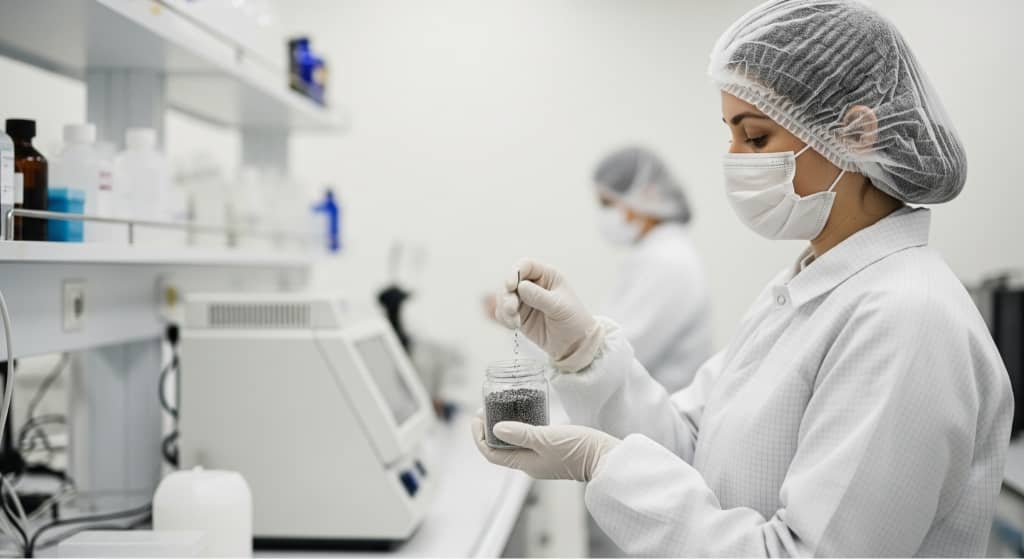
Material Sciences Revolution
Farther afield from health care, chitin is transforming US materials science with sustainable alternatives to petrochemicals for superior performing, niche materials.
Advanced Composite Materials
US aerospace and automotive industries will adopt chitin based composites with high strength to weight ratios and with biodegradability at the end of life.
These materials are especially useful in weight sensitive applications, including aircraft components and automotive body panels. Boeing and other manufacturers are testing chitin fortified composites for use in three aircraft parts.
The particular fiber architecture of chitin endows it with outstanding tensile strength and flexibility and thus is suitable for use in circumstances that demand both strength and shock absorption.
Vehicle makers are studying chitin composites for use in interior and other trim parts and body panels that must adhere to rigid safety requirements and help reduce overall vehicle weight to increase fuel economy.
Smart Materials and Responsive Systems
The emerging field of smart materials derived from chitin is one of the most promising front lines of American materials research.
They can adapt to environmental changes, such as pH, temperature, moisture etc., therefore they are promising in applications, including self healing composites and stimuli responsive medical instruments.
Research labs throughout the U.S. are engineering materials made of chitin that can transform in response to certain stimuli.
These responsive materials are being utilized for applications ranging from self regulating medical implants to building materials that change based on the weather.
Packaging and Consumer Products
The packaging industry is experiencing a fundamental shift as companies embrace chitin derived materials to address growing environmental concerns and meet consumer expectations for sustainable products.
American manufacturers have developed innovative chitin based films and protective coatings that deliver the same protective barrier performance as traditional petroleum plastics while offering complete biodegradability.
This breakthrough technology allows brands to maintain product quality and shelf life without contributing to the mounting plastic waste crisis affecting communities nationwide. The transition represents more than just material substitution; it’s a comprehensive reimagining of how packaging can serve both commercial needs and environmental stewardship.
Applications in food packaging are especially attractive, with chitin’s inherent antimicrobial properties having the potential to increase product shelf life and reduce the need to consider migration of chemicals from products of synthetic packaging materials.
Major food companies are testing the chitin based pack for fresh produce, cuts of raw meat, and processed foods.
As the packaging industry changes, Fresh On Time Seafood is taking on more of the role of chitosan manufacturers.
We are making custom formulations that meet the strict requirements of food-grade applications while staying true to their commitment to environmentally friendly processing methods.
In the years to come, the story of chitin in American health care, material science, and beyond is one of ever broadening applications, informed by new research successes, broader market adoption, and the steady rise of appreciation for its unique attributes.
Overlaying mandates, technology, and markets has provided a fertile ground for chitin applications to grow and diversify.
From wound healing to a material for sustainable production, chitin is a natural material to solve urgent issues in the health, and industry, bringing sustainable solutions that are beneficial not only for the patient’s health but also for the national economy.
FAQ
How will chitin shape the future of U.S healthcare and material sciences?
Chitin will help advance sustainable and biocompatible innovations that can replace synthetic and petroleum-based materials. In healthcare, it supports faster wound healing, targeted drug delivery systems, and tissue regeneration while helping reduce infection rates.
What’s the key difference between chitin and chitosan?
Chitin is the raw, natural polymer found in shellfish shells, while chitosan is a chemically modified version created through deacetylation. This chemical change gives chitosan solubility, bioactivity, and processing advantages that chitin doesn’t have.
How is chitin being used in modern healthcare applications?
Chitin is used in wound dressings, surgical sutures, drug delivery systems, and tissue regeneration scaffolds. Its biocompatibility and antimicrobial properties make it ideal for improving healing and reducing infection risks.
What makes chitin more sustainable than synthetic alternatives?
Chitin comes from seafood waste that would otherwise end up in landfills. By turning shell waste into high value biomaterials, U.S. companies are reducing environmental impact by up to 67%, according to EPA studies.
Which regions in the U.S. are leading chitin innovation?
States like Maine, Alaska, Oregon, and Washington are hubs for chitin processing and innovation. Coastal towns are seeing economic revival through biotech jobs linked to chitin production.