
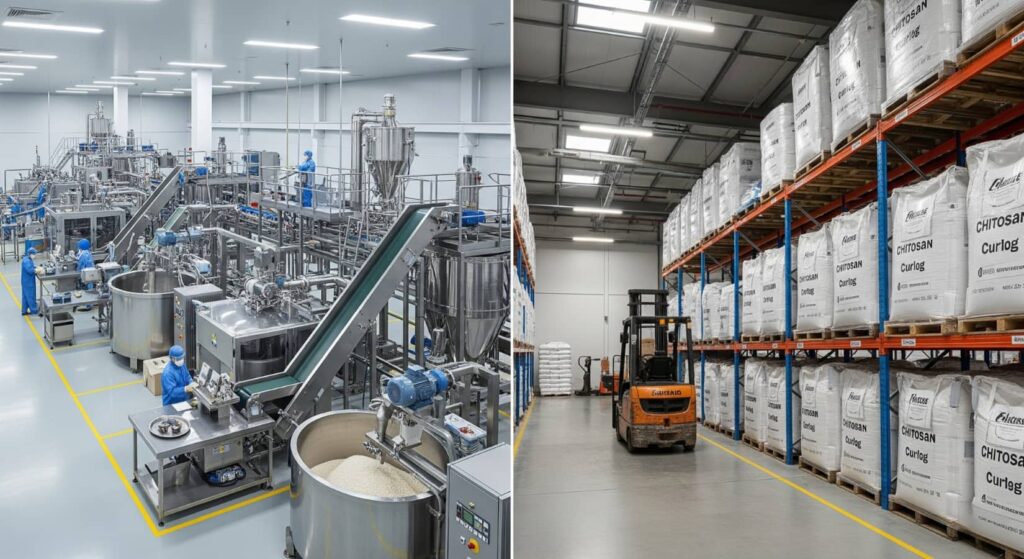
Choosing between a chitosan supplier and a distributor impacts your product quality, regulatory compliance, and supply chain resilience. Here’s why partnering with the right source matters.
This decision determines how consistent your product quality will be, how traceable your materials are, whether your operations will be able to hit strict regulatory targets, and even how resilient your supply chain will be to market shifts.
Consider it this way, some supplier, typically a manufacturer, is the one making the chitosan. They convert the crustacean shells, raw, into a flexible sort of biopolymer with smart, adjusted properties.
Distributors don’t produce chitosan, they resell pre-made batches from multiple sources, often with no control over quality or consistency.
When you choose to work directly with a manufacturer, you’re partnering with companies that have complete control over their production process.
Fresh On Time Seafood, established by Bintarna Tardy in 2004, is a trusted global manufacturer and supplier of premium seafood and chitosan products made from crab shells.
Our sustainable and innovative approach serves a wide range of industries, including food, healthcare, cosmetics, agriculture, and water treatment. We are committed to delivering consistent quality, exceptional service, and reliable solutions to clients worldwide.
Key Differences: Chitosan Suppliers vs. Distributors
To really know what sets a chitosan supplier apart from a distributor, you need to look past labels. A chitosan supplier, especially when they are also the chitosan manufacturer, is more than just a person who sends you a product.
They are the source of its existence, converting crustacean shells into a high-value, useful biopolymer. This comes well before chitosan is a usable material. It all starts with sourcing the raw material.
Responsible Raw Material Sourcing
Unlike distributors, which may just buy what’s on offer, a manufacturer carefully chooses shells they use (shrimp, crab, or other crustaceans), often favoring sustainably sourced byproducts from fisheries that are regulated.
This is not just a matter of finding raw materials; it’s a matter of making sure what’s going into production is safe, ethical, and appropriate for its intended use.
Advanced Processing and Customization
Then it’s onto the processing process, a complex set of procedures involving deproteinization, demineralization, and deacetylation. It’s not just a bunch of technical mumbo-jumbo; this is why chitosan is so versatile.
By controlling this process, extraneous proteins and minerals were removed from the shells, and a purified biopolymer was obtained. During this phase, the producer can tailor important characteristics such as the DDA, viscosity, and molecular weight.
It is these far-ranging applications that make chitosan’s properties so fascinating and interesting, whether as a soil conditioner, food preservative, wound-healing promoter, or pharmaceutical vehicle.
What are the benefits of taking chitosan?
Chitosan is a natural, non-toxic fiber that may support digestion and promote the growth of healthy gut bacteria. It’s often considered a prebiotic, which helps improve intestinal health. Some studies also link it to cholesterol reduction and weight management.
Rigorous Quality Control and Compliance
It doesn’t stop there. Any chitosan supplier that also produces the chitosan can’t be but very strict about quality control.
Our production follows standard operating procedures aligned with GMP, ISO, and HACCP principles, with selected processes subject to evaluation by accredited third-party auditors to help ensure consistency and quality.
Particularly in industries such as pharma and food, where regulatory adherence is the ticket to the game, the oversight that continues is the difference between a product that’s market safe and a product that brings about a costly regulatory headache.
This type of hands-on method allows the manufacturer to provide uniform, traceable, and extremely tailored chitosan. It’s what makes them the leading partner for companies in industries including agriculture, cosmetics, biotech, medical devices, and pharmaceuticals.
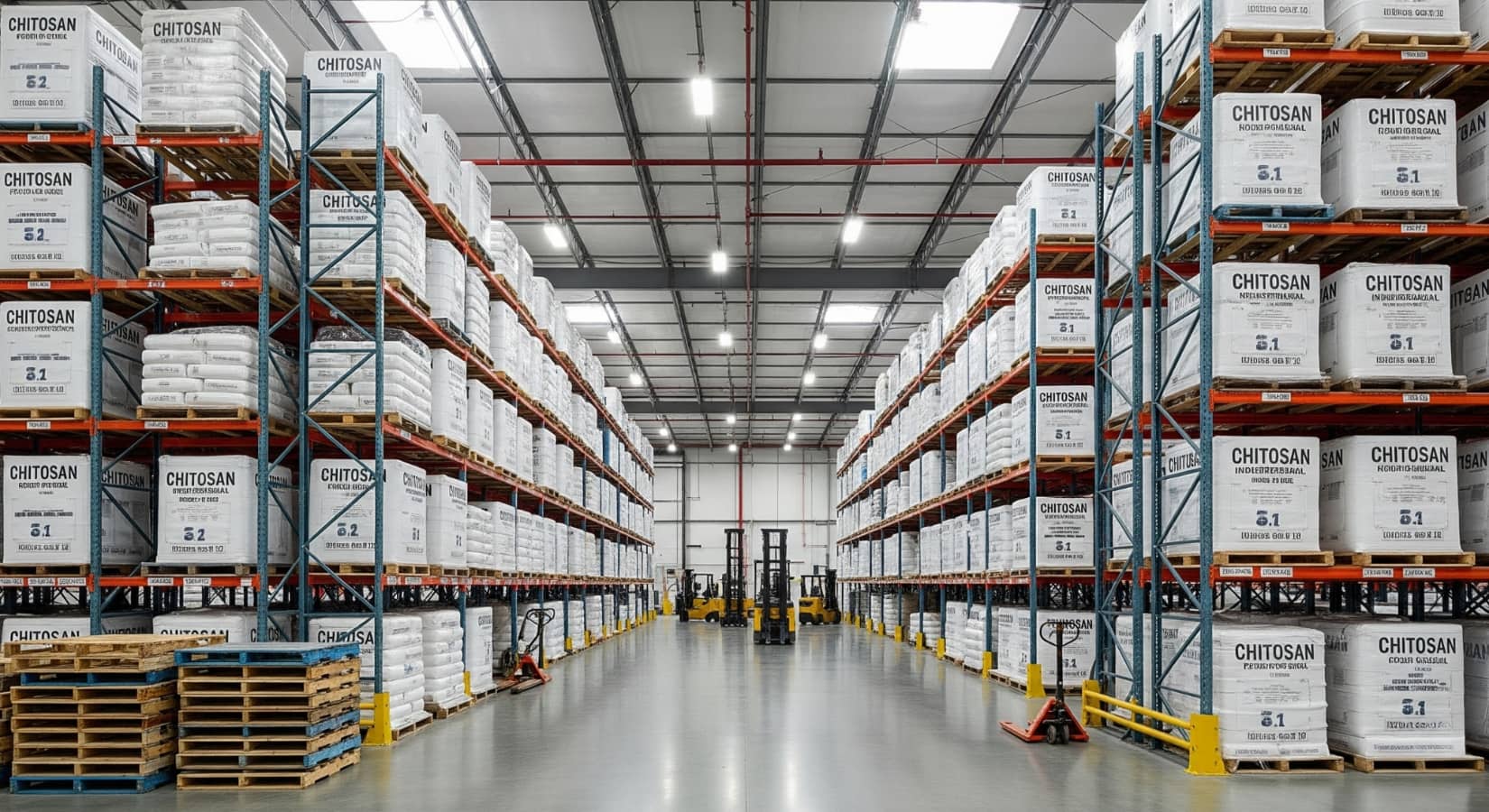
Why This Matters to Your Business
Having reviewed these differences, here’s why it impacts your business strategy directly. Between a chitosan supplier and distributor, it goes beyond price. It’s a strategic move that shapes the backbone of your business.
Your partner doesn’t deliver material. They impact how your end product runs, whether you are able to comply with regulatory requirements, and how resilient your supply chain is when the going gets tough.
Quality and Consistency
If your business requires exacting performance, whether for a pharmaceutical-grade excipient, a premium cosmetic formulation, or a high-quality food additive, nothing less than premium quality will do. Chitosan is not a generic product.
Its solubility and bioactivity are determined by the Degree of Deacetylation (DDA), its viscosity and film forming capability by the molecular weight, and how it blends with or reacts with other constituents in your formulation by the particle size.
A manufacturer of chitosan, after all, is not just making chitosan. It is engineering, they’re also experts with the ability to change these features so that the product works the way you want in your application.
They have the ability to adjust processing parameters, form tightly toleranced batches, and even modify specifications to help your business get a leg up on the competition.
They generally provide defined grades from multiple manufacturers, but batch-to-batch consistency cannot be guaranteed.
This loss of command results in inconsistency, an unknown that can jeopardize your product quality, increase your rejects, or surprise you with unexpected reformulation costs.
In sectors like pharma, food, medical devices, and agriculture, these aren’t trifling irritations. They are potentially business-killing risks. One bad batch can result in regulatory delays, product recalls, or compromised customer confidence.
That’s why, if quality and consistency are important to your operation, working directly with a chitosan manufacturer becomes critical.
Cost and Supply Chain Stability
When it comes to running a sustainable business, cost control and supply chain reliability are two sides of the same coin. These are the factors that can separate you from the competition in the chitosan market.
For the process of producing chitosan, it’s not simply cutting out the middleman just for going through a middleman, although there’s that, but that has immense consequences.
Distributors apply their own markups, typically influenced by market availability, so what you’ll be paying per kilogram can vary significantly each time. With a manufacturer, you get access to direct pricing, which is generally more stable and transparent.
You’re not paying a reseller’s overhead or falling victim to unpredictable price bumps created by middlemen sourcing. But price is just part of the picture. Equally important is supply chain stability, and here is where manufacturers set the bar.
Is chitosan approved by the FDA?
Medical Devices. When used in wound dressings or similar medical devices, chitosan is regulated by the FDA’s Center for Devices and Radiological Health (CDRH). Approval pathways include: 510(k) Premarket Notification: Demonstrating the device is equivalent to a legally marketed predicate device.
When you work with such providers, you will be able to produce exactly when you need to, as a specialist chitosan manufacturer has the capability to plan around your requirements.
With long-term contracts, the manufacturer can dedicate production cycles exclusively to your orders, and you have on-hand inventory that meets your needs on demand. Distributors can’t do that because they rely on supply by others.
That predictability can be life or death. Whether it’s a pharmaceutical company debuting a new drug, a cosmetic brand readying a seasonal product line, or an agricultural business that needs to align with planting cycles.
A chitosan supplier, however, can be more than just a source of material. They can be a partner in your planning, helping you minimize lead times and the risk of stockouts and therefore reduce the costs of your hidden supply chain disruptions.
Customization and Scalability
One of the greatest benefits of working with a chitosan manufacturer is the ability to tailor a product to exact technical specifications, and scale that product as your business develops.
Chitosan isn’t a one-dimensional material. The characteristics of chitosan, such as DDA value, molecular weight, viscosity, purity, and particle size, also affect its performance in different applications.
For instance, you may need a chitosan with 85% DDA to achieve the best solubility and bioactivity on the skin for a cosmetic serum you are developing.
Perhaps you use chitosan for a wound dressing and need a low-viscosity, high-purity chitosan for biocompatibility studies and healing applications. These are not “off-the-shelf” needs.
If you need a specific chitosan, a chitosan manufacturer will be happy to custom formulate a product to meet your specific needs. They are able to adjust the operating conditions, test numerous batches, and optimize the fit of the final product to your formula.
This level of control means that you can develop products that truly differentiate in the market. Whether pharmaceutical, cosmetic, agricultural, or food processing is your market segment.
But customization is only half the story. Scalability matters just as much. What begins as small batch needs for R&D can soon progress to high-volume production once your product hits the market.
A manufacturer already has the logistics in place to expand with your business that also guarantees a quality product, so you won’t have to compromise on quality as your demand grows.
By contrast, distributors provide very little of this type of support. They can only sell what they can source, typically from many different producers, and consistency across batches, or even scaling production, is tricky.
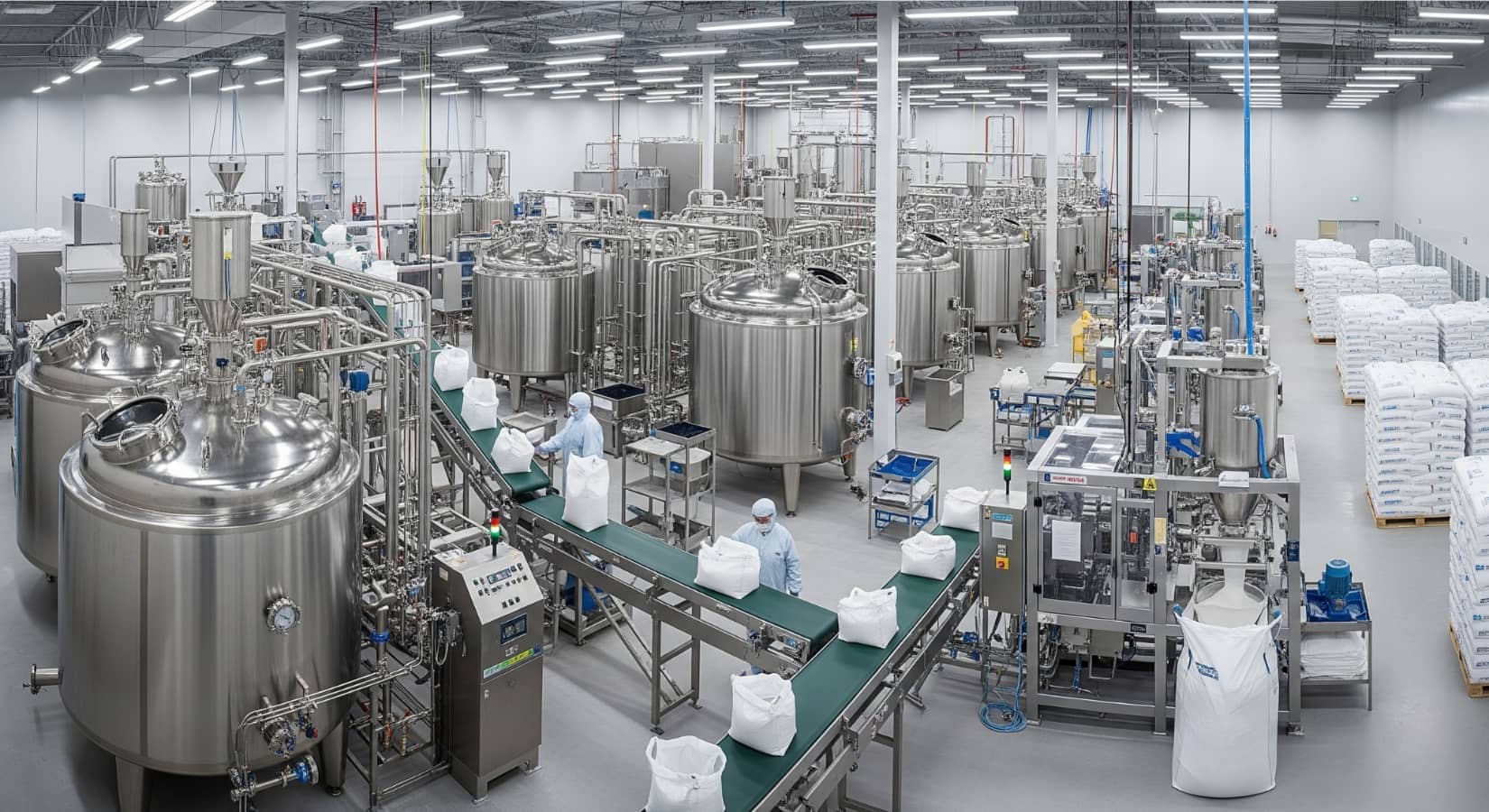
Why Fresh On Time Seafood Is The Ideal Choice
In the chitosan industries, not all suppliers are alike. Most businesses can supply you the raw material, but only a few can offer you the kind of control, consistency, and partnership Fresh On Time Seafood provides.
That’s where we’re different. We’re not just a supplier, we’re a real chitosan manufacturer, with an original process from start to finish that sets us apart.
Unlike distributors who sell products they may not have had a hand in producing, or partial producers who outsource key parts of the production process, Fresh On Time produces everything in-house.
This vertical integration is our greatest asset, allowing us extraordinary control over quality, sustainability, and supply chain security.
We know that no two clients are alike. That’s why we enable mass customization. Whether it’s dialing in the Degree of Deacetylation (DDA), tweaking the viscosity, adjusting the particle size, or something else entirely.
Whether you work with biotechnological companies, which have the ambition to change the general health, or the ones expecting to maximize the crop quality in agriculture, our chitosan solutions will meet your needs.
And we think big, which is why our manufacturing is built to meet international standards from the ground up. If you’re exporting to the US, Europe, or Asia, our comprehensive documentation and procedures can help simplify your path through complex regulatory requirements.
This approach provides you with a significant international competitive advantage in global markets.
When you are working with Fresh On Time, you’re not just purchasing the raw material. You’re partnering with a team that views itself as a long-term sourcing ally dedicated to helping you expand, innovate, and outpace the competition.
This full-circle mentality is what has allowed our clients to be with us for the long term. They understand that with Fresh On Time, they’re not purchasing a commodity.
They’re investing in a relationship based on trust, knowledge, and mutual success.
FAQ
What’s the main difference between a chitosan supplier and a distributor?
A chitosan supplier, especially a manufacturer, produces chitosan from raw crustacean shells and controls quality, customization, and traceability. A distributor merely resells chitosan sourced from various producers without direct control over production.
Why is working with a chitosan supplier better for quality and consistency?
Suppliers control every stage of production, allowing them to offer consistent, traceable, and customizable batches that meet strict industry standards, unlike distributors who often sell inconsistent batches from different sources.
How does a supplier offer better value in cost and supply chain stability?
By eliminating middlemen, suppliers provide stable pricing and can align production with client needs, ensuring long-term availability and reducing risks of delays or stockouts, something distributors can’t guarantee.