
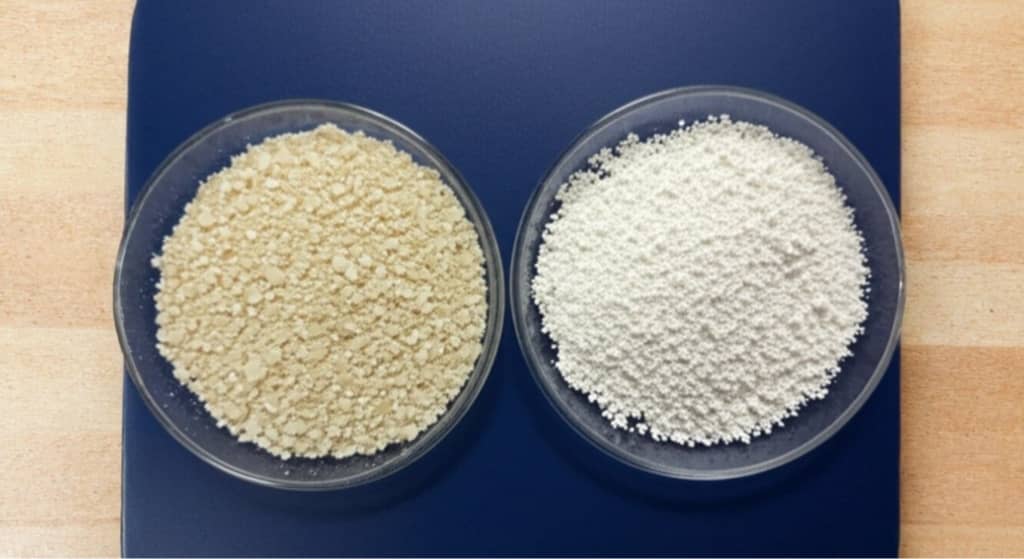

When people first hear about chitin and chitosan, they often think these are just fancy chemistry terms. But here’s what’s interesting: these two materials from seafood waste are actually revolutionizing entire industries.
Both come from those crab shells and shrimp leftovers that restaurants usually toss out, yet they couldn’t be more different in what they can do.
The main difference? It’s all about chemistry. Chitin is what nature gives us directly- the raw polysaccharide that makes crab shells tough.
Chitosan, on the other hand, is what we get when we chemically modify chitin, completely changing how it behaves and what we can use it for.
If you’re in B2B procurement, this distinction matters more than you might think. The wrong choice here can derail an entire product development cycle.
Pharmaceutical companies, packaging manufacturers, and water treatment facilities- they all need to know exactly which material fits their specific needs. Because while both materials start from the same place, where they end up is completely different.
This understanding of chitin and chitosan’s unique properties drives everything we do at Fresh On Time Seafood.
Founded by Bintarna Tardy in 2004, Fresh On Time Seafood is a respected international processor and supplier of quality seafood and chitosan products produced from crab shell.
Our sustainable and disruptive solution is applied across multiple industries, from food to healthcare, cosmetics, agriculture, and water treatment. We are dedicated to providing quality, value, and reliability and keeping the needs of our customers first.
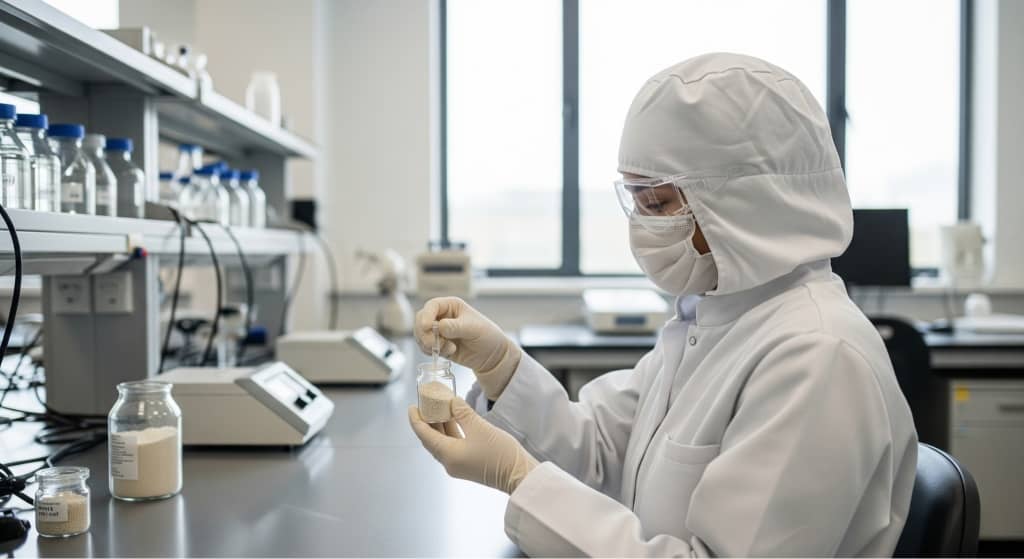
Chitin: The Insoluble Workhorse for Structural Applications
Think about this for a second- chitin is everywhere in nature. It’s the second most common natural polymer after cellulose.
Every time you crack open a lobster shell or see a butterfly wing, you’re looking at chitin in action. The stuff is literally built into the structure of countless organisms.
‘Due to its crystalline structure, which gives it a high hydrophobicity, chitin is insoluble in water, organic and inorganic solvents, and common acidic or basic solutions.’- Guarneri, et al. (Source: Nature)
What Makes Chitin Work
At the molecular level, chitin consists of repeating sugar molecules (N-acetylglucosamine) locked together in rigid chains—like nature’s version of reinforced concrete. This structure gives it
- 3x the tensile strength of PLA bioplastic (comparable to nylon)
- Near-zero solubility in water, acids, or common solvents
- 90% crystallinity, meaning it won’t flex or degrade easily
Chitosan, its chemically modified cousin, sacrifices some structural integrity (about 20% lower strength) to gain
- Solubility in weak acids (pH < 6)
- Built-in antimicrobial properties
- Ability to form gels, films, and nanofibers
Think of it like wood (chitin) versus plywood (chitosan)—same base material, but one is rigid and permanent, while the other can be molded and given special coatings.
What really stands out about chitin is its crystalline structure- we’re talking about 85% crystallinity in some cases. This gives it serious mechanical strength, around 40-60 MPa tensile strength, plus excellent dimensional stability.
The material can handle temperatures up to 300°C before it starts breaking down. Try dissolving it in water, most solvents, or weak acids. Good luck with that.
What does chitin do to the human body?
Chitin isn’t digestible like regular food, but certain human enzymes can break it down. When consumed, it may help support gut health and stimulate the immune system. Some studies suggest it can influence inflammation and act as a mild dietary fiber. However, its effects are still being researched.
Getting Chitin from Waste to Product
Commercial chitin extraction is where seafood processing waste gets a second life. The process involves stripping away everything that isn’t chitin interesting
– proteins, minerals, you name it. Traditional methods use a two-step approach:
First comes demineralization, where hydrochloric acid dissolves away the calcium carbonate (that’s about 20-40% of the shell weight). Then deproteinization uses sodium hydroxide to remove proteins, which account for another 20-30% of the shell mass.
But here’s where it gets interesting- newer extraction methods are changing the game. Enzymatic deproteinization can target specific proteins without the harsh chemical treatment. Microwave-assisted extraction speeds things up while using less energy.
These aren’t just minor improvements; they’re fundamentally better approaches that improve yields and reduce environmental impact.
Where Chitin Actually Gets Used
Despite being difficult to dissolve, chitin finds its way into some surprising applications. Textile manufacturers are incorporating chitin fibers because they naturally resist bacteria and break down safely in the environment.
High-end cosmetics use chitin microparticles as natural exfoliants- think premium skincare products where synthetic alternatives just don’t cut it.
Agriculture represents a growing market for chitin. Because it degrades slowly, it works perfectly for controlled-release fertilizer systems. Farmers get sustained nutrient delivery without worrying about environmental runoff.
Biomedical applications take advantage of chitin’s structural integrity for surgical sutures, wound dressings, and tissue engineering scaffolds where long-term stability matters.
Here are some specific ways chitin gets used:
Food Packaging: Chitin films provide oxygen barrier properties that rival synthetic polymers while being completely biodegradable. Food companies are switching specifically for sustainability reasons.
Biocomposites: Automotive and construction industries use chitin reinforcement when they need to meet environmental standards without sacrificing performance.
Water Filtration: The fibrous structure makes chitin effective for filtration applications, especially where biocompatibility is crucial.
Antimicrobial Textiles: Athletic wear and medical textiles benefit from chitin’s natural antimicrobial properties without needing chemical treatments.
Chitosan: The Bioactive Powerhouse for Medical & Food Tech
Take that stubborn chitin and put it through deacetylation, and suddenly you have a completely different material. This isn’t just a minor modification- it’s a fundamental transformation that opens up possibilities chitin could never achieve.
In the aspect of industrial application, the reliable chitosan supplier is especially important when considering the consistent quality of the product and the schedule of production.
The Transformation Process
Converting chitin to chitosan involves alkaline deacetylation using concentrated sodium hydroxide at high temperatures.
The degree of deacetylation (DD) typically ranges from 70 to 95% in commercial products, and this number determines almost everything about the final material’s behavior.
Higher DD means better solubility in acidic solutions and stronger biological activity. But there’s a trade-of – you might lose some mechanical strength and thermal stability.
Fresh on Time Seafood, as a chitosan manufacturer, has spent a fortune on state-of-the-art control systems to ‘hit’ the DD every time without degrading the polymer in the process.
Modern processing uses sophisticated control systems to nail the DD consistently while preventing the polymer from degrading during treatment.
Temperature, alkali concentration, reaction time, and atmospheric conditions- all these variables affect what you end up with. Getting them right requires real expertise and proper equipment.
Why Molecular Weight Matters
Chitosan’s molecular weight dramatically affects what you can do with it:
Low molecular weight chitosan (50,000-150,000 Da) works great for dietary supplements and pharmaceutical applications where you need easy processing and good bioavailability.
High molecular weight versions (300,000-1,000,000+ Da) are essential for industrial applications where mechanical properties matter- think structural materials and advanced composites.
The real game-changer is solubility. Remove those acetyl groups, and chitosan becomes soluble in weak acidic solutions like acetic acid.

Suddenly you can do solution casting, electrospinning, and film formation- all the processing techniques that were impossible with chitin. This pH-responsive behavior also enables controlled gelation and programmable material properties.
Dealing with an established chitosan manufacturer ensures that you receive the correct molecular weight specifications for your intended application.
The Biological Activity Advantage
Here’s where chitosan really shines. The deacetylated form creates a polycationic polymer with biological properties that chitin simply doesn’t have.
Those positively charged amino groups interact with negatively charged cellular components, creating antimicrobial activity against bacteria, fungi, and certain viruses.
The activity level depends on molecular weight, deacetylation degree, and pH conditions.
This means you can actually tune the antimicrobial properties for specific applications- stronger activity for medical devices, moderate activity for food packaging, whatever your application needs.
Some specific chitosan applications that showcase these advantages:
Pharmaceutical Systems: Drug delivery platforms that respond to pH changes, wound dressings that actively fight infection, and tablet excipients that control release rates.
Water Treatment: As a coagulant, chitosan pulls suspended particles, heavy metals, and organic contaminants right out of wastewater. Municipal treatment plants are adopting chitosan specifically for this capability.
Food Preservation: Natural antimicrobial coatings that extend shelf life without synthetic preservatives. Produce companies report significant reductions in food waste using chitosan treatments.
Advanced Biomedicine: Injectable gels for tissue engineering, surgical hemostatic agents, scaffolds for regenerative medicine applications.
Premium Cosmetics: Anti-aging formulations where chitosan provides both moisturizing and antimicrobial benefits.
The Real Differences That Matter
When you’re making procurement decisions, these are the differences that actually impact your bottom line:
Chemical Structure Reality
Chitin keeps 90%+ of its acetyl groups, creating a rigid, crystalline structure that’s essentially insoluble in everything.
Chitosan has 70-95% of those acetyl groups removed, exposing amino groups that completely change how the material behaves.
Does chitin raise blood sugar?
Chitin itself has no known effect on blood sugar levels. However, its derivative, chitosan, may help lower fasting blood sugar and HbA1c levels. It doesn’t seem to significantly affect insulin levels. Always consult a healthcare provider before using it for blood sugar management.
Solubility: The Make-or-Break Factor
Chitin? Forget about solution processing. You’re limited to mechanical methods like compression molding and blending.
Chitosan dissolves nicely in acidic conditions (pH < 6), opening up casting, spinning, coating, film formation- basically all the processing techniques that create value-added products.
Fresh on Time Seafood, as a reliable manufacturer of chitosan, knows the importance of solubility control and uses very strict quality control on their production.
Biological Activity: Inert vs. Active
Chitin is biologically inert, which is perfect when you want the material to just do its job without interfering with anything else.
Chitosan brings serious biological activity- antimicrobial, antifungal, and antiviral properties that you can tune for specific applications.
Processing and Cost Reality
Chitin extraction is relatively straightforward with basic equipment and lower processing costs.
Chitosan requires that additional deacetylation step, and specialized equipment and adds 40-60% to production costs. But the expanded functionality often justifies the premium.
Fresh on Time Seafood, as a dedicated chitosan manufacturer, generally achieves superior economies of scale and consequently offers more competitive pricing for high-tonnage orders.
Market Economics
Chitin runs $8-15/kg- the budget option when enhanced functionality isn’t needed.
Chitosan costs $20-100+/kg, but the superior performance and broader application range often justify the investment.
Decision Framework: Which One Makes Sense?
Go with Chitin When:
Budget constraints are tight, and basic functionality covers your needs. Long-term structural integrity matters more than processing flexibility. You actually want biological inertness- stable pH environments, and minimal biological interaction.
Mechanical properties are your primary concern. Simple processing methods work for your application. Regulatory approval processes need to be straightforward.
Choose Chitosan When:
Antimicrobial performance is critical to your application. You need solution-based processing capabilities. The bioactive functionality justifies higher material costs.
pH-responsive behavior gives you application advantages. Chemical modification capabilities are important for customization. Regulatory pathways are already established for your use case.
Identifying the right chitosan supplier is more than just price; it is about technical support, regulatory compliance, and consistency in quality requirements.
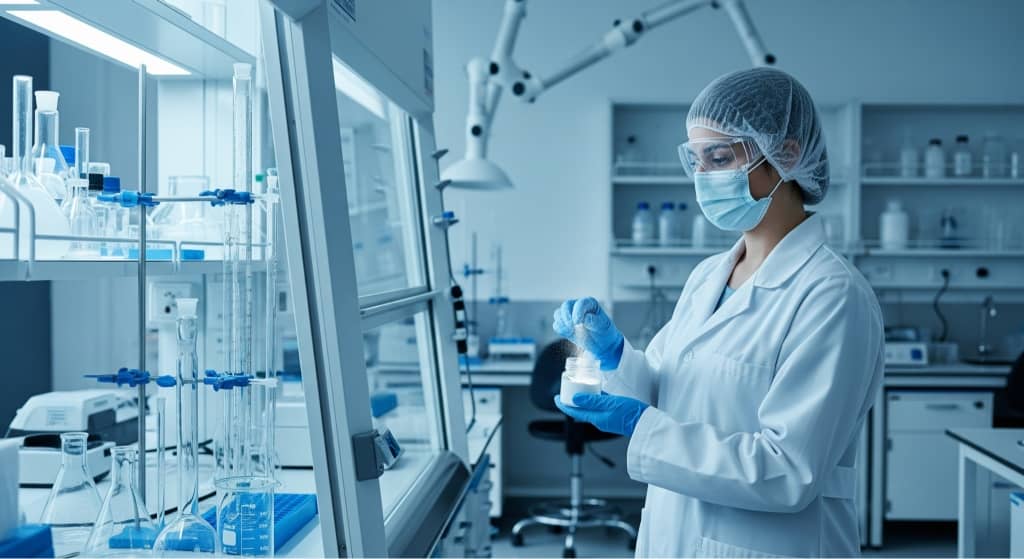
Industry-Specific Guidance
Pharmaceutical Applications:
Chitosan dominates in active pharmaceutical ingredients, drug delivery systems, and wound care products. The biocompatibility and controlled-release properties are unmatched.
Chitin works for structural implants and non-active medical devices where you want the material to perform its function without biological interference.
Food Industry:
Chitin excels in packaging applications where long-term barrier properties matter most. It’s also more straightforward from a regulatory perspective.
Chitosan shines when you need active packaging with antimicrobial properties to extend shelf life.
Agriculture:
Chitin works well for soil conditioning and slow-release fertilization where gradual breakdown over time benefits plant growth.
Chitosan is better for plant protection and growth stimulation where immediate biological activity helps.
Water Treatment:
Chitosan wins for most applications- superior flocculation and contaminant removal capabilities make it the clear choice.
Chitin only makes sense for basic filtration where you don’t need the advanced chemistry.
Cost-Benefit Analysis That Actually Works
Total Cost Considerations:
Raw material costs: Chitin costs 2-3x less than chitosan upfront.
Processing complexity: Chitin may require specialized handling equipment.
Performance premium: Chitosan often delivers functionality that justifies the price difference.
Regulatory pathway: Varies significantly by application and geographic market.
End product value: Enhanced functionality can support substantial cost premiums.
Making the Right Choice
After looking at all this, the chitin vs. chitosan decision comes down to really understanding what your application needs, not just what sounds good in theory.
Chitin makes sense when you need mechanical strength, chemical stability, and cost control.
Its biological inertness and processing simplicity work perfectly for structural applications, basic packaging, and soil conditioning where you just need the material to perform reliably over time.
Chitosan justifies its higher cost when you need that biological activity, solution processability, and functional versatility.
For pharmaceuticals, active food packaging, water treatment, and advanced biomedicine, chitosan’s capabilities often make it the only viable choice.
The key is matching performance to real requirements while building in flexibility for future product development.
Companies that understand these materials deeply and establish solid supplier relationships will have significant advantages as markets increasingly demand bio-based, environmentally responsible solutions.
Both materials represent the future of sustainable manufacturing. Getting this decision right sets you up for long-term success in markets that value innovation, environmental responsibility, and superior product performance.
FAQ
What’s the key difference between chitin and chitosan?
Chitin is the raw, natural polymer found in shellfish shells, while chitosan is a chemically modified version created through deacetylation. This chemical change gives chitosan solubility, bioactivity, and processing advantages that chitin doesn’t have.
Why does solubility matter in choosing between chitin and chitosan?
Chitin is nearly insoluble in most solvents, limiting its use to solid-state applications. Chitosan dissolves in acidic environments, enabling advanced processing like film casting, coating, and electrospinning.
How does chitosan offer biological advantages over chitin?
Chitosan has antimicrobial, antifungal, and antiviral properties due to its positively charged amino groups. You can tailor its activity for medical, food, or agricultural applications by adjusting its molecular weight and DDA.
What are some industry-specific uses for chitin?
- Textiles: Natural antibacterial fibers
- Cosmetics: Microparticle exfoliants
- Agriculture: Controlled-release fertilizers
- Packaging: Biodegradable films with oxygen barriers