
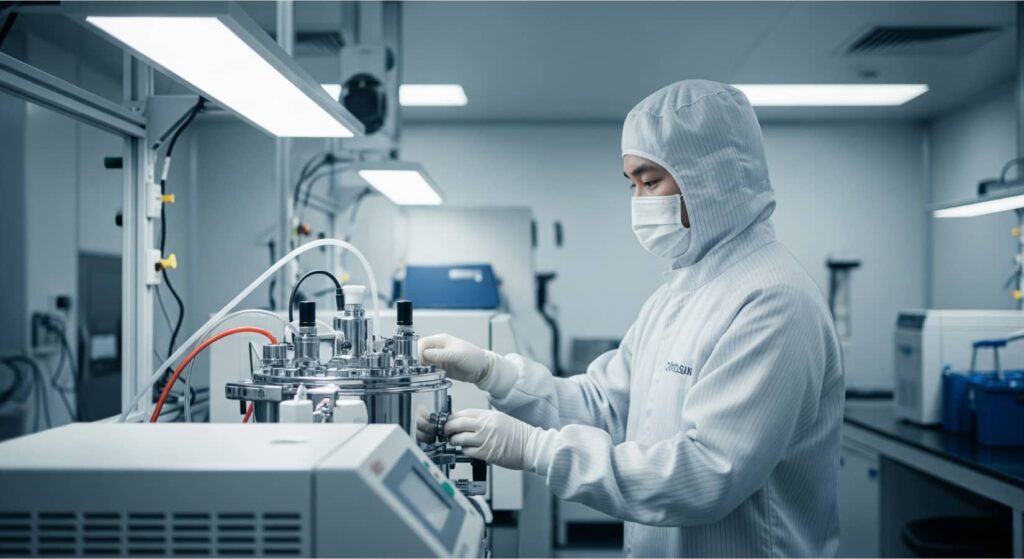
Founded by Bintarna Tardy in 2004, Fresh On Time Seafood is a respected international processor and supplier of quality seafood and chitosan products produced from crab shells.
Our sustainable and disruptive solution is applied across multiple industries, from food to healthcare, cosmetics, agriculture, and water treatment. We are dedicated to providing quality, value, and reliability and keeping the needs of our customers first.
Not all chitosan is created equal, and at PT Fresh On Time, we understand that science backs up this important distinction. While most manufacturers use similar raw materials like shrimp or crab shells, the real difference lies in one critical process, deacetylation.
When evaluating potential partnerships, selecting the right chitosan manufacturer becomes essential for ensuring product consistency and meeting stringent quality standards across diverse applications.
This key step determines the quality and effectiveness of the final chitosan product, setting apart superior chitosan from standard alternatives.
Deacetylation The chemicophysical transformation of the naturally occurring polysaccharide chitin into the biopolymer chitosan has made this polymer a versatile material that can be used in agriculture, water treatment, food preservation, pharmaceutics, and biomaterials.
But it was not that simple to do. It must be performed with accuracy at the temperatures, durations, pH, and reagent concentrations involved. Any little change in any of these parameters could lead to considerably different final products.
What is Deacetylation and Why Does It Even Matter?
Deacetylation is an important chemical process that is a cornerstone in the synthesis of chitosan. It is the deacetylation of chitin, a constituent of the exoskeleton of crustaceans (such as crabs and shrimp), the cell walls of fungi, and many other things.
Although chitin is a structurally strong material, it is not soluble in water and so is not capable of use for most industrial and biomedical applications. On the contrary, chitosan is soluble in water under acidic conditions and has many functional groups.
Chitosan is a converted form of chitin that is obtained by deacetylation, in which acetyl groups on chitin’s glucosamine units are removed by a treatment with heat (in the presence of an alkaline solution, such as sodium hydroxide (NaOH)).
The efficiency and specificity of this step can be evaluated in terms of DDA, which is indicative of the number of removed acetyl groups.
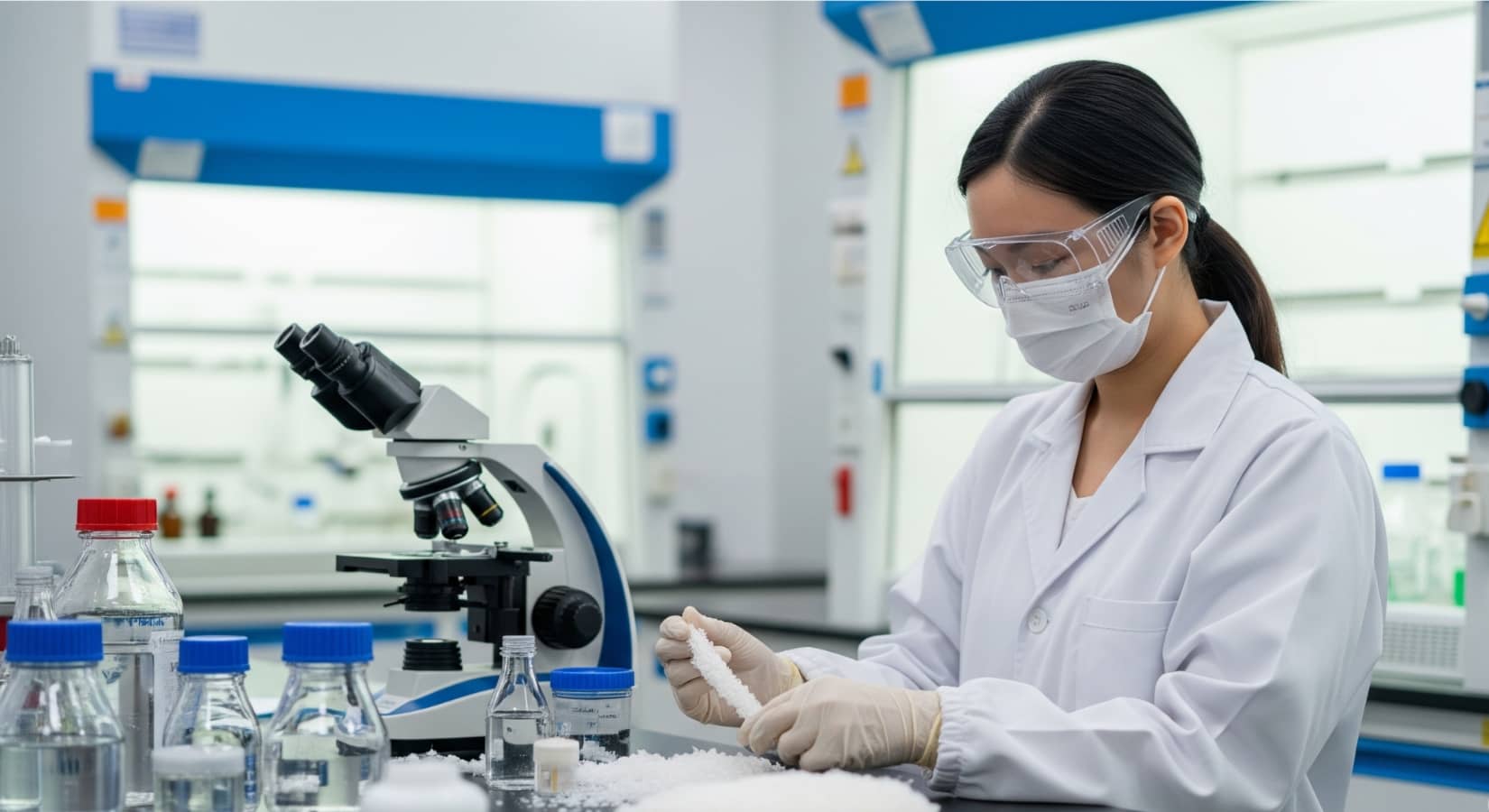
Importance of High DDA
A high DDA (generally above 85%) is desired, as it maximizes:
- Water solubility, which decreases formulation viscosity for aqueous compositions in antimicrobial, antioxidant, and plant growth promotion applications.
- High bioactivity is crucial for biological and plant growth promoting, antimicrobial and antioxidant applications.
- Biocompatibility for pharmaceutical, wound healing, and tissue engineering applications
- Chemical reactivity for further functionalization in advanced material development
Understanding these critical parameters is why many companies prioritize working with an experienced chitosan supplier who can guarantee consistent DDA levels and technical expertise.
3 Risks of Poor Deacetylation
Deacetylation needs to be tightly regulated. Insufficient deacetylation may lead to various quality problems as follows:
- Variation in DDA, which can result in inconsistency between batches and unreliable performance in end use applications
- Residues of impurities (proteins, heavy metals, or alkalis) affect purity and safety.
- Nonuniform molecular weight distribution with resultant viscosity, film forming capability, and mechanical strength
- Poor bio functionality, impacting the efficacy in high end applications such as drug delivery or biostimulants
At PT Fresh On Time, we know that deacetylation is more than a chemical process, it is at the core of quality chitosan.
As a leading chitosan manufacturer, we have invested significantly in developing proprietary technologies that differentiate our products from conventional market offerings.
It’s for this reason that we have spent over two decades developing a proprietary deacetylation method to deliver high and consistent DDA levels in each and every production batch. Our system employs:
- Controlled temperature and reaction time
- Multiple levels of washing and filtering ensure no impurities.
- Real time DDA monitoring during processing
- Mild, molecular preserving conditions
Because of that, our chitosan has been customized to meet the demands of performance critical industries, specifically medicines, agriculture, cosmetics, and food processing, where a tradeoff between consistency, safety, and performance cannot be made.
Our Deacetylation Precision
There are two major factors that influence the quality of chitosan: purity and structural integrity of raw material chitin.
At Fresh On Time Seafood we start our production by carefully selecting chitin from shrimp shells from sustainable sources for the high polysaccharide structure and low contaminants (proteins, lipids, and minerals).
This strict choice of raw material guarantees just the right starting point for the conversion to chitosan.
After the chitin has been prepared, we begin with the alkaline treatment, which serves as a crucial step in our process. During this phase, acetyl groups are systematically removed from the chitin polymer chains to produce high-quality chitosan.
We utilize food-grade sodium hydroxide (NaOH) in a carefully controlled environment that monitors temperature, concentration, and reaction time.
What are the benefits of deacetylation?
Deacetylation improves the functionality of certain molecules by removing acetyl groups. In histones, it tightens DNA structure and helps regulate gene expression. In chitosan production, deacetylation increases solubility, bioactivity, and compatibility for industrial and medical uses. It’s a key process for enhancing material performance.
Our primary objective is achieving a high Degree of Deacetylation (DDA) while preventing molecular weight degradation and maintaining structural integrity.
What differentiates our process is the utilization of a semi continuous reaction system, which is an alternative to the conventional batch that most producers use.
This technology will provide greater manipulation of reprocess kinetics and therefore minimize the potential for batch to batch variability. It also enables us to:
- Maintain a uniform alkaline environment
- Prevent localized overheating or underreaction
- Guarantee uniform and complete deacetylation on the entire chitin matrix
Furthermore, our ability to monitor in light step control parameters in real time allows us to optimize conditions on the fly and obtain the highest efficiency and repeatability.
These advanced capabilities position us as a trusted chitosan manufacturer, particularly for clients requiring pharmaceutical grade materials with stringent regulatory compliance.
The outcome is chitosan increased in structural uniformity, reduced impurities, and consistent performance, which is important in high end applications such as pharmaceuticals, agriculture, and cosmetics.

Proprietary Filtration and Washing System
Premium quality chitosan is not “just” deacetylated; it must also be carefully purified.
Chitosan also requires complete washing to eliminate any residual sodium hydroxide and undesirable contaminants such as degraded proteins, pigments, minerals, and potentially toxic metals that may be present in the source biomass.
Start your business with the right quality and purity with a unique multi stage filtration and washing process developed by PT Fresh On Time to handle even the strictest requirements of the biomedicine, pharmaceutical, and food tech industries.
This system has been developed in the laboratory and optimized in industrial practice. The main steps of our purification process are
First Neutralization: The leftover NaOH is then neutralized through cleaned rinsing cycles by purified water and acid buffers, modulating the pH of the product till the chitosan achieves a safer pH.
Multi Stage Filtration: A composite of non woven fabric, ultra fine mesh, activated carbon, and ion exchange, we target organic remnants, reproductive hormones, pigments, and toxic residual metals (like iron, lead & arsenic).
Ultrapure Water Wash: Chitosan is subjected to multiple rinsings with deionized water to reach very low residual ionic levels (such as sodium and chloride), an important consideration in biomedical and pharmaceutical uses.
Centrifugation and Vacuum Drying: Chitosan is separated and dried under controlled conditions to maintain structure and inhibit recontamination while reducing the likelihood of oxidative degradation and development of microbiological contaminants.
The final result is exceptionally high-quality chitosan powder with a clean white to off-white appearance. This premium product demonstrates complete solubility, maintains very low ash content, and produces no unpleasant odors.
Our commitment to excellence truly sets us apart, as we consistently go above and beyond industry standards in every aspect of production.
Our materials not only meet but frequently exceed the most stringent quality control requirements established by leading pharmacopeias, including USP (US Pharmacopeia), Ph.EUR (European Pharmacopoeia), and JP (Japanese Pharmacopoeia).
Such a critical level of purification is not only necessary for regulatory compliance but also for optimal performance in demanding end use applications, including
- Wound healing materials
- Ophthalmic gels
- Drug delivery capsules
- Cosmetic emulsions and bioactive serums
In Line Monitoring of DDA
We are PT Fresh On Time, and we believe quality should be included in the process and not be a result. That is the reason we have set up an advanced in line monitoring system, to follow one of the most important aspects of chitosan production, the Degree of Deacetylation (DDA).
We do not wait for the product to be produced to test each batch at the end of the production run, instead, we have at line equipment for real time analysis, such as Fourier Transform Infrared Spectroscopy (FTIR) and precision titration based measurement systems.
With these technologies, we can observe the process of chitin transforming into chitosan in real time.
Why is this important? As DDA is the major factor to determine the performance of chitosan. It has a direct impact on solubility, bioactivity, viscosity, and compatibility with other components in diverse forms of formulations.
But even small differences in these components can lead to:
- Poor batch consistency
- Product rejection or reprocessing
- Less functional for sensitive products (such as pharmaceuticals or cosmetics).
By using in line monitoring:
- We verify that every batch is within the target DDA range of 85 to 95%.
- We are able to make on the fly modifications during production to adjust variations.
- We minimize waste, rework, and delays so you can get things out faster and make your customers happier.
This proactive quality assurance philosophy is particularly appreciated by our customers in fields where rigorousness and reproducibility leave no room for compromise.
Whether you’re creating wound dressings, agricultural biostimulants, or food grade preservatives, you can trust our chitosan to consistently perform, again and again.
Thermal Stability and Molecular Integrity
Chitosan is a sensitive biopolymer. Even though it has great functional flexibility, it can be destroyed by improper thermal exposure during processing.
Excessive or unregulated heat applied during deacetylation or drying may result in molecular breakdown, the long chain polymer structure being broken into shorter chain units, and the long term properties of interest, for example:
- Molecular weight
- Viscosity
- Film forming ability
- Mechanical strength
- Bioactivity
At PT Fresh On Time, thermal control is the paramount element of our philosophy of production. Our machine is designed to keep an extreme and uniform thermal profile during production.
Starting from the alkaline treatment until drying and post treatments, each step is clearly controlled and tuned in order to prevent any thermal spike that could damage the structure of chitosan nanoparticles.
This controlled thermal management has many advantages, this holds molecular weight that is required for applications such as edible coating, biodegradable packing, and wound dressing.
It is also said to provide a consistent viscosity, enhancing blending, gelling, and emulsification in formulations. It inhibits the creation of low the molecular weight broken chitosan that does not function well in industrial or biomedical usages.
What is the mechanism of deacetylation?
Deacetylation is a chemical process where an acetyl group is removed from a molecule, such as histones or chitin. This reaction is usually enzyme-driven in biological systems or chemically induced in industrial processes. It changes how molecules interact, affecting properties like solubility, reactivity, and gene regulation.
In addition, our chitosan is preserving the integrity of the molecular structure, and also preserving its maximum biofunctionality characteristics (i.e., more reactivity to further associate and react with other compounds like active substances, nutrients, or pharmaceuticals).
This is particularly vital for advanced applications in nanocomposites, encapsulation devices, and drug carriers, where product performance is determined by molecular precision.
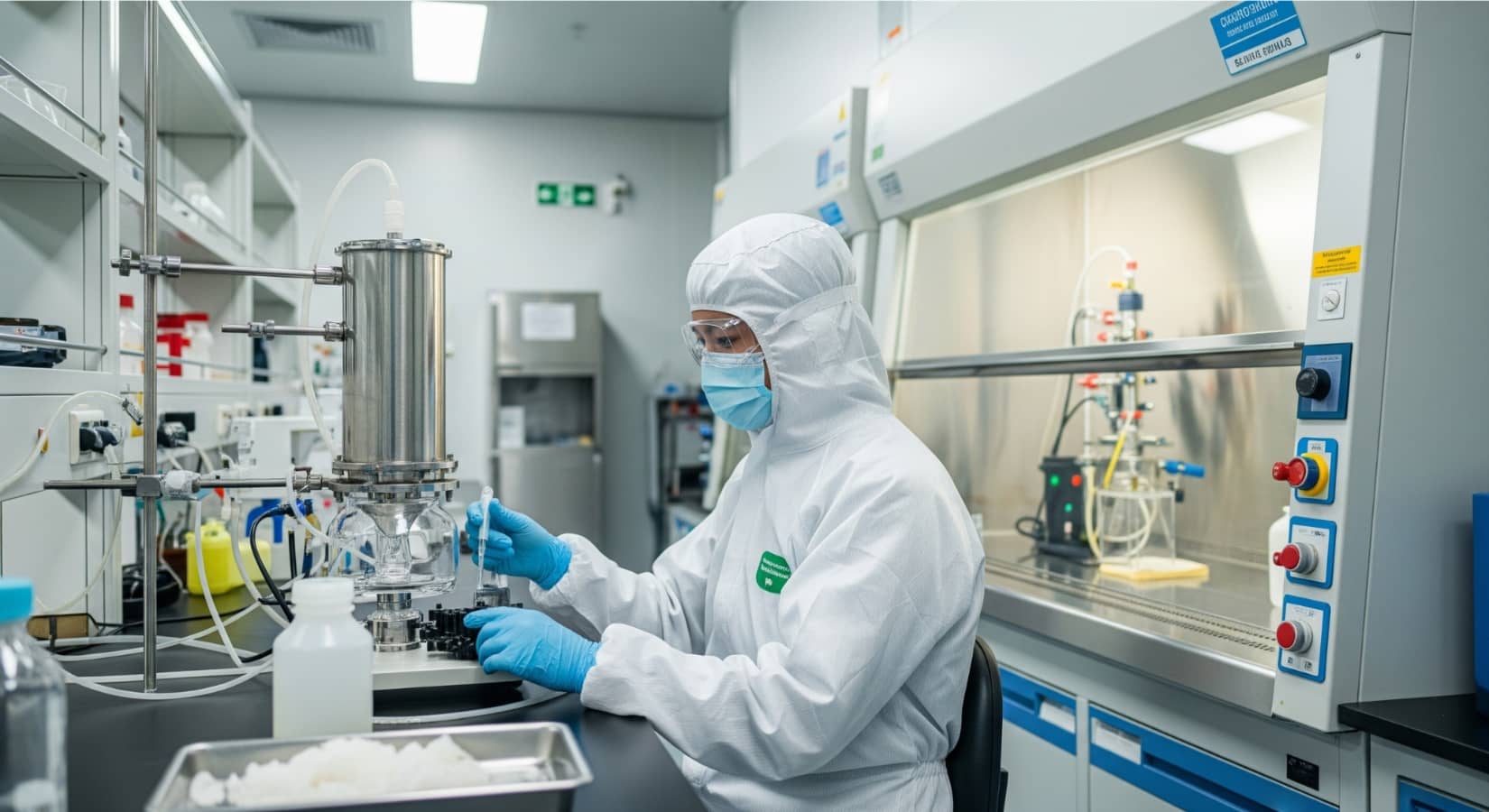
What Makes Our Chitosan Different From The Others?
At PT Fresh On Time, we exceed traditional manufacturing processes for performance and purity with chitosan.
One of the leading and unique features of this new antifungal is that we use a composition and a process developed within our company, which allows us to differentiate our formulation from others in prevailing use.
The optimized process, that is, raw material selection, proprietary deacetylation, purification, and drying, yields a product with unique properties, giving us a totally new approach to a topical antifungal. Here’s why our chitosan is the best:
Highly Soluble in Acidic Media
One of the most attractive characteristics of good chitosan is the ability to dissolve in a slightly acidic solution such as acetic or lactic acid.
With our high DDA (Degree of Deacetylation) we always get back, we can be sure that our chitosan dissolves fast and homogeneously, perfect for liquid formulations, gels, and coatings!
This is particularly important in applications such as agriculture (biostimulants), cosmetics (serums, emulsions), and pharmaceuticals (drug delivery systems) where dispersion and bioavailability are relevant.
Free of Harsh Chemical Residues
Even in commercial chitosan products, there are residual sodium hydroxide, proteins, or heavy metals, which may be toxic or reactive.
Based on our multistage washing and filtration process, our chitosan is free of unwanted residues and applicable for sensitive uses like biomedical materials, food additives, and ophthalmic solutions.
This purity level minimizes the potential for side effects and regulatory concerns in tightly regulated sectors.
Non Toxic and Biodegradable
Our chitosan comes from nature and is processed without harmful agents to ensure that it is safe for you and the planet. It has good biocompatibility, non toxicity and complete biodegradation and is degraded in the body without any environmental pollution.
This renders PLA a chosen candidate for sustainable product development for agriculture, medical, packaging, and other sectors.
High DDA to Weight Ratio for Excellent Performance
We operate our production under a tight DDA range of 85 to 95%, which is essential to product reliability. Such uniformity allows for consistent viscosity, reactivity, and solubility from batch to batch.
For materials, research, and food processing clients, this stability means higher yields and accurate formulations test after test and year after year.
Customizable for Diverse Applications
Different use industries have different requests. We provide customized formulations that perfectly meet your application, whether you require solutions with low or high molecular weight, certain viscosity ranges, or specific particle sizes. Our chitosan is customizable for:
- Agriculture (biopesticides, plant stimulants)
- Pharmaceuticals (wound care, drug carriers)
- Preservation, edible coatings, and encapsulation of food and drinks
- Cosmetics (anti aging creams, moisturizers)
- Textiles (antimicrobial coatings, fabric softeners)
Industries seeking reliable partnerships recognize PT Fresh On Time as a distinguished chitosan supplier, particularly valued for our ability to deliver consistent quality and provide comprehensive technical support throughout the development process.
At PT Fresh On Time, we set ourselves apart as the preferred chitosan supplier by excelling at the most important stage in production: the deacetylation process.
By employing sophisticated process control, real time feedback, and proprietary purification processes, we ensure high and consistent DD, purity, and molecular stability features of our chitosan.
This provides superior solubility, bioactivity, and safety in markets including pharmaceuticals, food, agriculture, and cosmetics.
Our attention to accuracy, longevity, and custom solutions enables us to achieve the highest international levels.
Our chitosan can be used as a deodorizer, preservative, and in many other applications. You can be confident in our stable quality and optimal performance for chitosan use, even in the most sensitive applications.
FAQ
Why does PT Fresh On Time Seafood’s deacetylation method make its chitosan different?
Our deacetylation process sets us apart by combining scientific precision, real-time DDA monitoring, and a semi continuous system to ensure consistent quality. We preserve molecular integrity and apply multistage purification to produce ultrapure, high performance chitosan.
How does PT Fresh On Time ensure consistent DDA levels?
We monitor DDA in real time using FTIR and titration-based systems. This allows us to make adjustments during production, ensuring every batch meets the 85–95% target range for superior quality.
What makes PT Fresh On Time’s chitosan purer than others?
We use a multi-stage washing and filtration process with activated carbon, ion exchange, and ultrapure water. This removes all impurities, like heavy metals, alkali residues, and pigments.
What applications is your chitosan best suited for?
Our chitosan performs in wound healing, food coatings, ophthalmic solutions, drug delivery systems, biopesticides, and anti-aging cosmetics. We customize formulations based on molecular weight, viscosity, and particle size to fit each industry’s needs.