
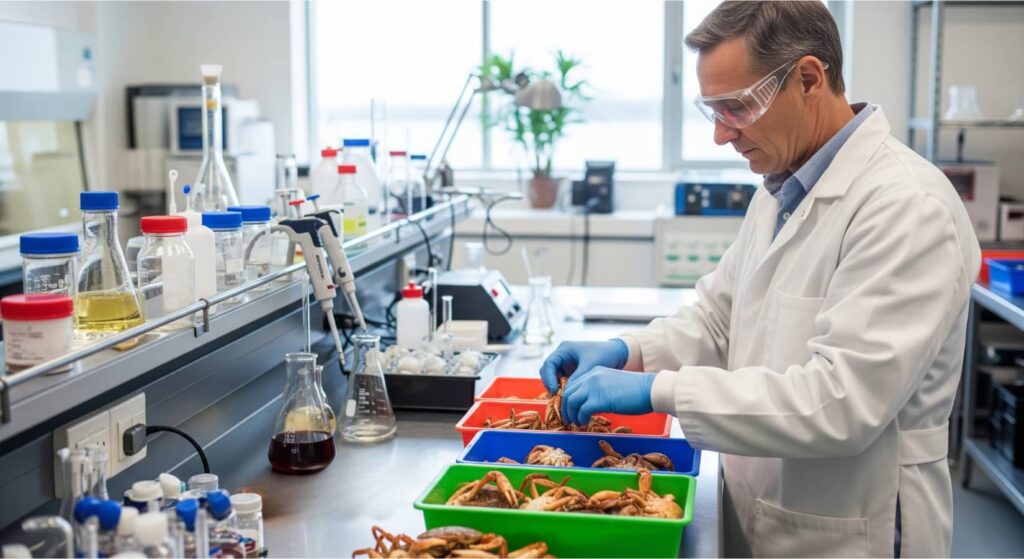

Every minute, seafood processing plants discard up to 3 tons of crab shells, but this “waste” holds immense potential. When properly processed, it can yield about 600 kg of purified chitin.
Various sectors of human activity now view the material as a substitute for synthetic polymers:
- In agriculture, chitin and its derivative chitosan are employed as natural biopesticides, as well as plant growth stimulators. They participate in crop yield increase and, correspondingly, reduction of chemical pesticide usage.
- In medicine and pharmacy, chitin acts as the base for wound healing dressings, surgical filaments, and drug delivery systems. Its biological origin and appropriate properties ensure biocompatibility and resistance to microorganism growth.
- Packaging, and the general tendency towards biodegradable materials, is interested in chitin as an alternative to petroleum plastics and a possibility to create chitinous films and coatings.
- In wastewater treatment, chitosan removes heavy metals and suspended particles and, therefore, aids in water processing.
The growing demand for chitin across these diverse applications has led to the emergence of specialized manufacturers who focus on sustainable extraction and processing methods.
Finding a reliable chitosan supplier has become crucial for businesses looking to incorporate this versatile biopolymer into their products and processes.
Fresh On Time Seafood, established by Bintarna Tardy in 2004, is a trusted global manufacturer and supplier of premium seafood and chitosan products made from crab shells.
Our sustainable and innovative approach serves a wide range of industries, including food, healthcare, cosmetics, agriculture, and water treatment. We are committed to delivering consistent quality, exceptional service, and reliable solutions to clients worldwide.
Ultimately, however, chitin is not a by-product of waste but rather an organically existing material.
It serves as an essential structural element of all of the biological forms of biological organisms, where protection against stress is one of the important functions: in the skeletal exoskeleton of the shrimp and crab organisms, the hard surface of insect body parts, and the outer shell or mushroom cell walls.
In this way, chitin derives from nature’s waste, the shells and covers of exoskeletons, and the remains of fungi, and gains its value only due to human-induced high-tech processing.
This factor also makes chitin material one of the most relevant materials in the modern world, requiring the transition to a circular economy.
What is Chitin?
Chitin is a naturally occurring polysaccharide, which means it is a long-chain carbohydrate molecule composed of repeating sugar units. Specifically, chitin is made of N-acetylglucosamine, which is a derivative of glucose.
The units of the molecule are linked together by β-(1→4) glycosidic bonds, which is the same type of linkage found in cellulose.
Is chitin a protein or carbohydrate?
Chitin is a carbohydrate, specifically a linear polysaccharide. It’s made of repeating N-acetylglucosamine units linked by β-(1→4) bonds. Although it can bind to proteins in nature, chitin itself is not a protein. Its structure is similar to cellulose but with added acetyl groups, which affect its properties.
Speaking of which, cellulose is the structural material of plant cell walls, and in the animal and fungal kingdoms, chitin is analogous to this substance.
It provides mechanical strength and rigidity, primarily to the organisms requiring protective exoskeletons or a durable outer layer. Here are some of the main characteristics as to what makes a chitin:
- Structural similarity to cellulose: chitin, just like cellulose, is not soluble in water and forms crystalline microfibrils, which makes its biological material tough.
- Combination with proteins and minerals: in most organisms, chitin is found in the form of being bonded with other compounds, such as proteins, calcium carbonate, etc. This makes a lightweight, tough material, such as crab shells or beetle wings.
- Biocompatibility and biodegradability: chitin is nontoxic and not allergenic and can be naturally decomposed by chitinase. Thus, it is perfect for biological and environmental uses.
Chitin is the second most abundant natural polymer on Earth, inferior in quantity only to cellulose.
It is among the components of the cell walls of fungi, the exoskeletons, of arthropods such as crustaceans and insects, as well as in the scales of fish and the shells of certain mollusks.
The industrial importance of chitin is interconnected with its conversion into chitosan, a more soluble form that possesses unique features such as antimicrobial activity, the ability to absorb heavy metals, and film formation.
Fresh on Time Seafood, as a reputable chitosan manufacturer, understands the critical importance of maintaining strict quality control throughout the conversion process to ensure optimal product performance.
As such, it is of little surprise that crustaceans, forming the largest and most abundant natural source of chitin, are so widely exploited in the food, pharmaceutical, and other industries.
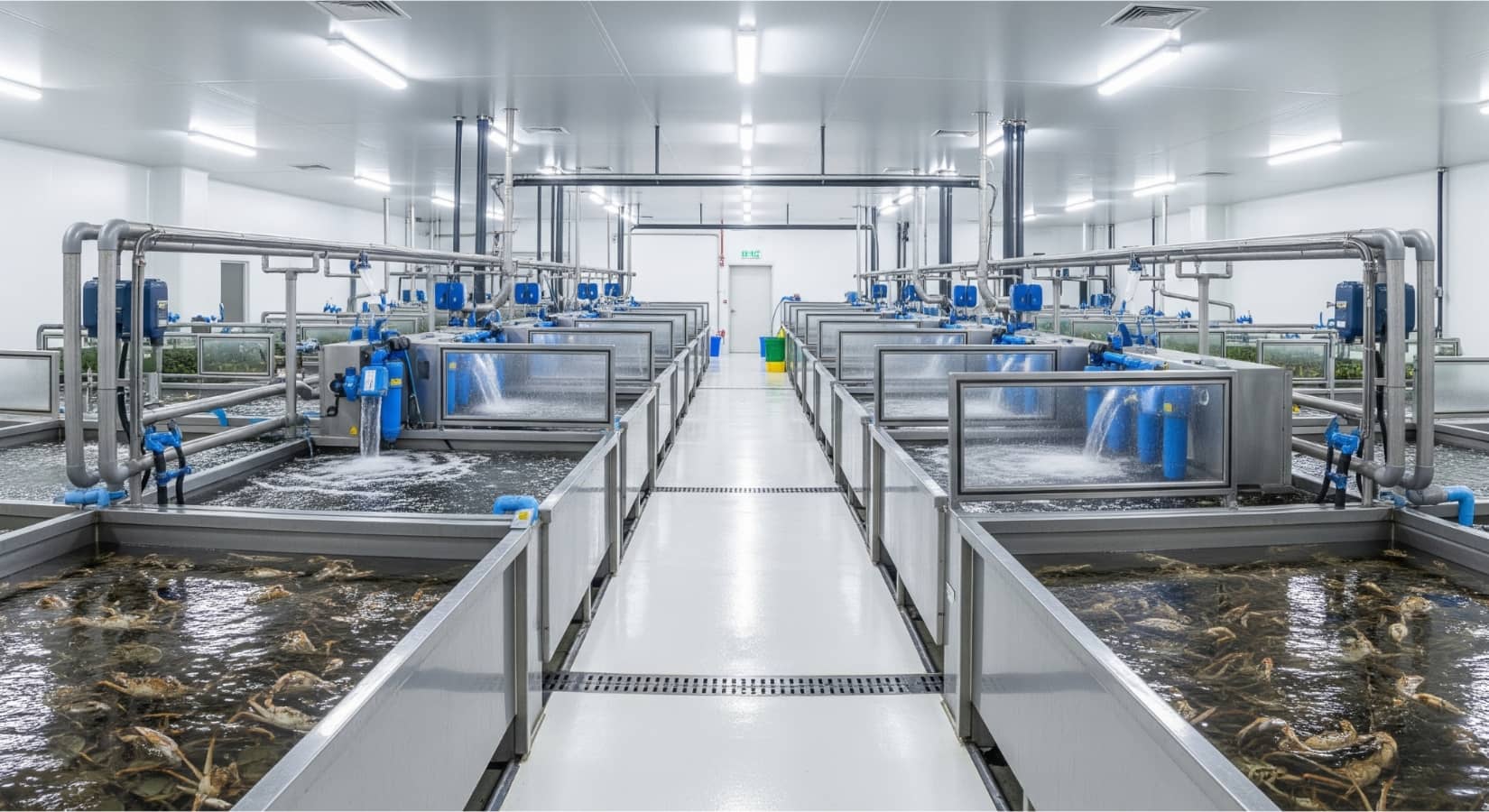
Crustaceans: The Largest Supplier of Chitin
Crustaceans, specifically shrimp, crabs, and lobsters, continue to be the highest and the most commercially exploited source of chitin among all known natural sources of chitin.
These sea creatures have hard exoskeletons high in chitin to help keep the shells strong, protective, and resistant to predators and other environmental threats.
‘Crustacean shell waste is the major commercial source of chitin. Chitin is extracted after deproteinization and demineralization using chemical or biological methods. Chitin nanomaterials can be isolated in the form of chitin nanocrystals or chitin nanofibers.’- Perez (Source: Chitin and Chitosans in the Bioeconomy)
Crustacean Waste: A Valuable Resource
Seafood processing worldwide generates millions of tons of crustacean shells every year. These shells, which were previously considered as waste, are a valuable bioresource.
Up to 20 – 30 % of the total body weight of Crustacea can be accounted for by its exoskeleton (Polikarpov 19812), making them an extremely dense source of chitin.
For companies seeking a trusted chitosan supplier, establishing partnerships with seafood processing facilities ensures a steady supply of raw materials while supporting waste reduction initiatives.
But untreated biomass waste unused for fuel production can decompose and generate odor, pests, and marine pollution. The extraction of chitin from these shells helps industry put waste to use, not only generating value from waste but also mitigating environmental damage.
Industrial Extraction Process
The methods for chitin isolation from crustacean shells The chitin is obtained from the shells of crustaceans by two procedures:
Chemical Extraction
- Demineralization : Shells are initially processed with acid (such as hydrochloric acid) to leach out calcium carbonate.
- Deproteinization: Next, deproteinization with an alkali (like sodium hydroxide) strips away the protein, leaving crude chitin.
- Decoloration (optional) Bleaching agents can be employed to decolorize chitin and obtain white chitin in the process.
This technique is effective but often harmful for the environment due to the release of chemical waste.
Biological Extraction
- The use of enzymes (such as proteases) or fermenting with bacteria to break down proteins and minerals.
- Greener and, in many cases, chitin of better quality and a higher degree of degradation.
- Under development for widespread adoption because of long processing time.
Chitin can be deacetylated to chitosan after it is extracted by deacetylation; acetyl groups are removed by concentrated alkali. Chitosan is more water soluble and reactive; thus it would be more useful in pharmaceutical, agricultural, and biomedical applications.
Environmental and Economic Benefits
Waste Reduction
Converting shrimp and crab shells to chitin keeps thousands of tons of organic waste out of landfills or the ocean.
Pollution Control
Reduces the burden of oceanic pollution, especially in coastal cities with large seafood industries.
Economic Opportunities
Nations with significant shrimp or crab industries (Indonesia, India, and Vietnam) could potentially convert this waste into high-value export items like medical-grade chitosan.
Regional businesses looking for a chitosan supplier, Fresh on Time Seafood, often find competitive advantages by sourcing from these emerging markets with abundant crustacean processing facilities.
Circular Economy
Break from the traditional “take-make-dispose” to promote reusing and regeneration– a fundamental principle of sustainability.
Insects: The New Chitin Frontier
The world is looking for a sustainable alternative to traditional animal farming, and you won’t believe what it is. Besides being protein-rich and being both human and animal foods, they are also chitin-rich, chitin being particularly abundant in insect exoskeletons.
Insects as an Alternative for Chitin
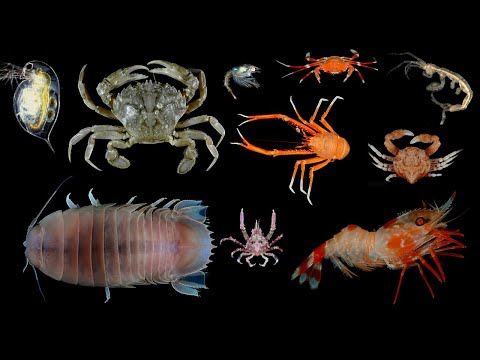
Invertebrates such as beetles, grasshoppers, crickets, and black soldier flies (Hermetia illucens) all have high proportions of chitin in their exoskeletons.
The exoskeletal or cuticular material of these insects is almost exclusively made of chitin-protein complexes, which provide them with mechanical strength and flexibility.
With the insect farming sector becoming firmly established and scaling up to provide a sustainable source of food and animal feed, chitin is becoming a high-value coproduct from such systems, since it turns a waste product (the exoskeletons following harvesting) into a resource.
As insect farming expands globally, Fresh on Time Seafood, as a forward-thinking chitosan manufacturer, is establishing partnerships with insect protein producers to secure this innovative and sustainable raw material source.
Sustainability and Efficiency
Consider these insects as a sustainable alternative to cattle or chicken:
- Minimal land use: you can farm insects vertically, and they take up a small amount of space.
- Less feeding: Numerous insect species can feed on organic refuse or by-products of agriculture.
- Water: Bug farming uses far less water than it takes to farm traditionally.
- Rapid Reproduction: Insects mature and reproduce quickly, so they can harvest year-round.
- Lower greenhouse gas: Insects give off almost no methane or ammonia and generate far fewer greenhouse gases than cows or pigs.
These properties make insect-derived chitin a significant candidate for developing circular bioeconomy approaches, particularly in urban or resource- limited areas.
Usefulness of Insect Chitin
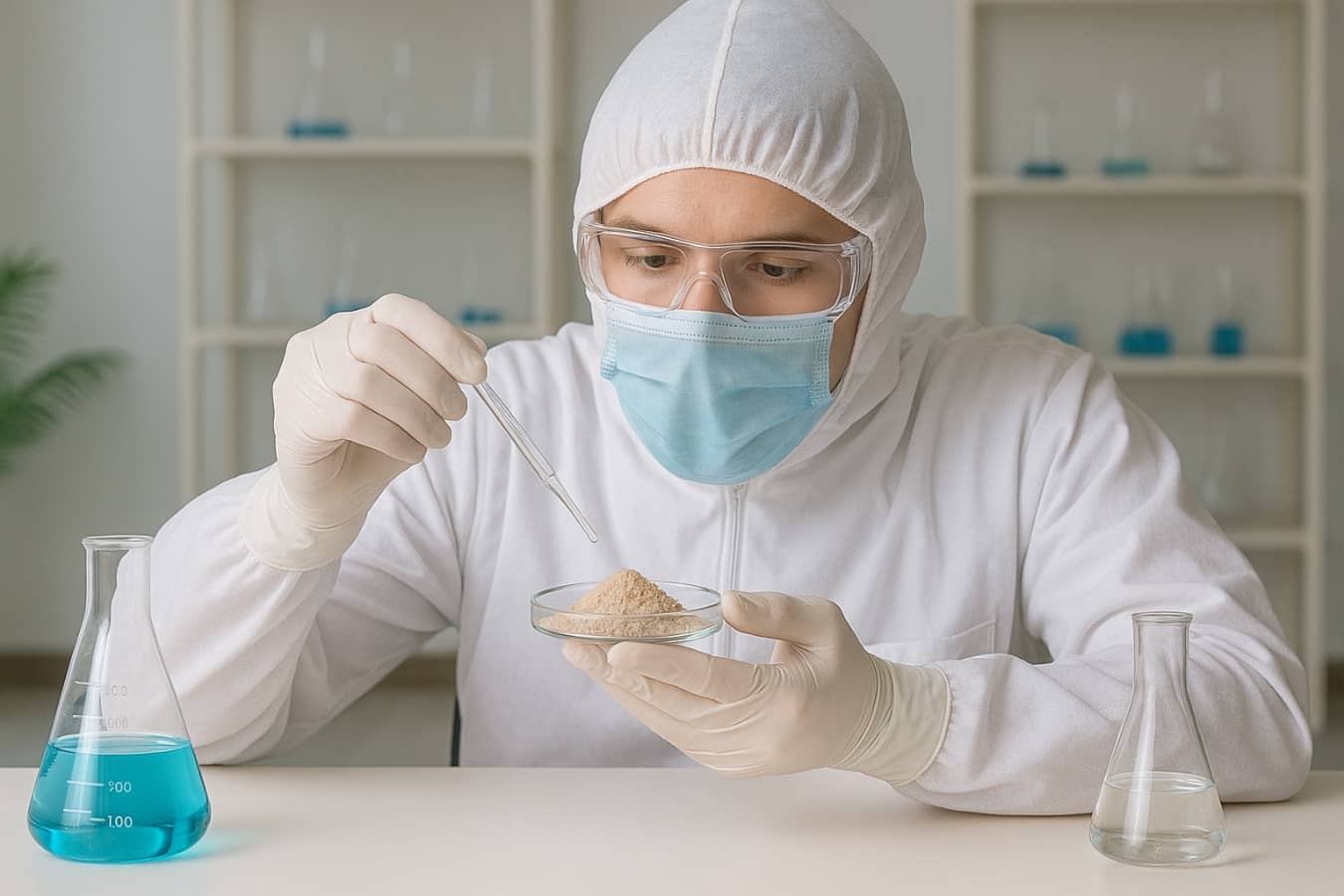
As described above, the insect-derived chitin has high purity and bioactivity; therefore, it has been widely used, such in:
Biofertilizers
Treats Made with chitin, which helps grow beneficial soil microbes and is a natural pest deterrent. It can encourage the natural defenses of plants, potentially reducing the need for synthetic chemicals.
Bioplastics
Insect chitin can also be used to turn into biodegradable plastics, a sustainable alternative to conventional plastic, made from petrochemicals. Such bioplastics can be turned into packaging, films, disposable utensils, and more.
Cosmetics and Skincare
Insect chitosan is getting popular in natural beauty products because of its antimicrobial and moisturizing features.
Beauty and cosmetics companies increasingly prefer working with a specialized chitosan supplier who can provide insect-derived products that align with their clean beauty and sustainability commitments.
Biomedical Fields
Although crustacean chitosan is more typical, insect chitosan is under study for use in wound healing and drug delivery.
Global Trends and Innovation
The EU and Asia are pouring money into insect biotech, including to startups that are using black soldier flies to produce both protein and chitin.
The researchers are also trying to design environmentally friendly insect processing systems to help extract chitin with very few chemicals by performing fermentation and enzymatic digestion.
With both sustainable materials and alternative proteins in high demand, chitin from insects will have a key role to play in the green economy.
Fungi: The Vegan Alternative to Chitin
Butterflies and grasshoppers may be chock-full of chitin, but fungi not only provide an identical, plant-based source, but by far, a purer, source of this highly prized biopolymer.
This renders fungal chitin particularly sought-after for vegan, vegetarian, kosher, and halal applications when animal products are restricted.
Why is Fungi a Special Source of Chitin?
Fungi, both edible mushrooms (e.g., shiitake, oyster, and button mushrooms) and filamentous fungi (e.g., strains of Aspergillus, Penicillium, and Mucor) have cell walls that contain chitin.
Together with beta-glucans and other polysaccharides, chitin contributes to the strength and rigidity of fungi and their resistance to environmental stresses.
Unlike in animals, where chitin is part of a heavily mineralized and protein-rich exoskeleton, fungal chitin is entangled in a simpler matrix, making extraction.
- More environmentally friendly
- Less chemically intensive
- Economical for small- scale and biotech applications
Advantages of Fungal Chitin
Easier Extraction
There is less protein and calcium carbonate in the fungal cell wall; as a result, strong acids and alkalis are less required in the pretreatment process. Pure chitin can easily be extracted by mild alkali treatment or an enzymatic hydrolysis process.
Cleaner and Safer Source
An added advantage is the absence of shellfish allergens, so fungal chitin is safe for those with allergies to seafood. Vegans and vegetarians are more open to materials produced by fungi.
Sustainable Production
Fungal biomass can be cultivated on agricultural or food industry residues (corn husks, molasses, and brewery waste). It doesn’t depend on wildcrafting or marine ecosystems, so it won’t harm the planet.
Is chitin stronger than bone?
Yes, chitin can be stronger than bone when comparing strength-to-weight ratios. Its fibrous microfibril structure and strong hydrogen bonds give it exceptional toughness. While bones rely on minerals for strength, chitin’s molecular design provides superior lightweight durability. This makes chitin ideal for use in strong, lightweight materials.
Biotechnological Applications of Chitin from Fungi
Fungal chitin and fungal chitosan have a strong potential in several high value-added fields:
Pharmaceuticals
Because of its biocompatible and capability to bind to therapeutic agents, PGS has been employed as a drug vehicle.
Biotechnologically produced chitosan from fungi can be used as a carrier system for bioactive agents and hence for their targeted liberation in the body.
Wound Healing
Fungal chitosan has antibacterial, anti-inflammatory, and moisture-retention activities. It supports tissue repair and has been applied to wound dressings, sutures, and healing gels.
Cosmeceuticals and Skincare
Facial masks, lotions, and anti-aging creams have also employed fungal chitin due to its protective film- forming effect and its skin humidity- preserving function.
Food Industry
Functions as a natural preservative and stabilizer, particularly in plant-based meat substitutes and vegan emulsions.
Growing Interest in Fungal Chitin
Since bottling up fungi in bioreactors for food is a thing, they also have the potential to provide a predictable, scalable source of chitin for commercial use, in cities or in other regulated onion rings of our system.
Now, startups and biotech labs are similarly investigating fungal fermentation to make chitin in a cleaner way that doesn’t rely on raising animals.
This is consistent with the worldwide trend toward cruelty- free, sustainable, and less-in-grid ingredient statements.
In summary, increasing access to fungi-derived chitin as a next-generation biomaterial is sustainable, ethical, and multifunctional for the circular economy.
FAQ
What are the sources of chitin?
Chitin is a natural biopolymer made of N-acetylglucosamine, found in the exoskeletons of crustaceans and insects, as well as in fungal cell walls. Nature produces it abundantly, second only to cellulose.
How is chitin extracted from crustaceans?
Industries extract chitin using chemical methods (acid and alkali treatment) or biological methods (enzymes or fermentation). While chemical extraction is faster, biological methods are more environmentally friendly and yield purer chitin.
Why is insect-derived chitin gaining popularity?
Insects like black soldier flies and crickets contain high levels of chitin in their exoskeletons. They offer a sustainable source with lower land, water, and feed requirements compared to traditional farming.
Is chitin safe for humans and the environment?
Yes, chitin is biodegradable, non-toxic, and biocompatible. It breaks down naturally and supports sustainable development goals across multiple sectors.