
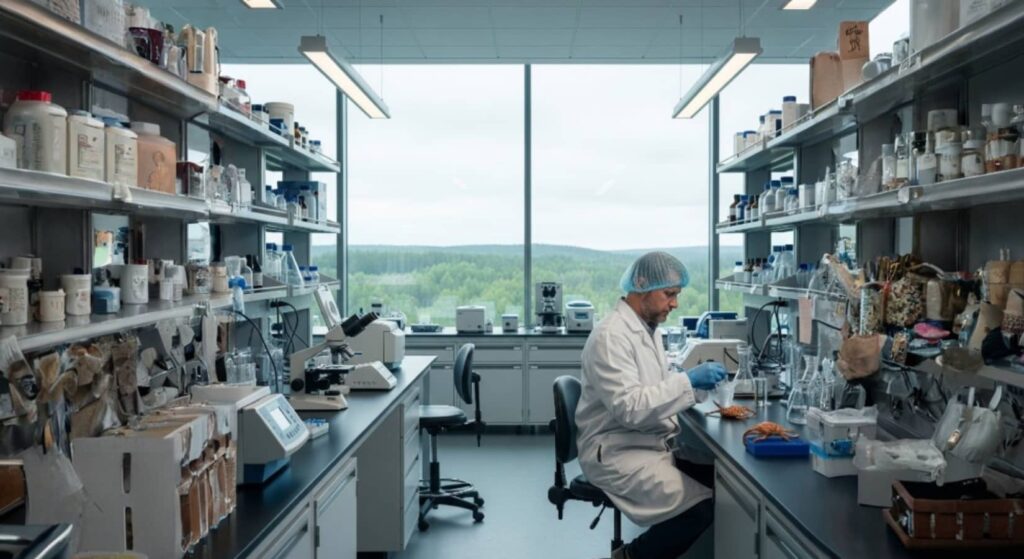

Chitosan is obtained from chitin, a natural polymer available in the exoskeletons of crustaceans, namely crabs, shrimps, and lobsters.
This fantastic biopolymer is one of nature’s most ideal templates of the most successful use of sustainable resources, turning something as worthless as seafood waste into valuable material that can be used for pharmaceuticals, food preservation, agriculture, and biotechnology, to name a few.
Knowing the origin of chitosan shows not only how amazingly resourceful it is but also how it helps drive circular economy concepts in the seafood sector.
Recognizing this tremendous potential, industry pioneers have emerged to transform this vision into reality.
Founded by Bintarna Tardy in 2004, Fresh On Time Seafood is a respected international processor and supplier of quality seafood and chitosan products produced from crab shells.
Our sustainable and disruptive solution is applied across multiple industries, from food to healthcare, cosmetics, agriculture, and water treatment. We are dedicated to providing quality, value, and reliability and keeping the needs of our customers first.
An Organic Foundation: Nature’s Second Most Abundant Polymer.
In previous sections we alluded to the origin of chitosan, which is chitin. This biopolymer is the second most abundant biopolymer around the world, after cellulose.
Chitin is present in the exoskeletons of insects and arthropods, particularly crustaceans and arachnids, as well as in some fungi and cell walls of certain organisms.
The word “chitin” comes from the Greek word “chiton,” or tunic, a fitting moniker for such a protective substance found in nature.
This polymer was first found in 1811 by French professor Henri Braconnot from mushrooms. But it wasn’t until 1859 that C. Rouget actually converted chitin to what we now call chitosan by alkaline treatment.
Chitin’s molecular structure works like nature’s LEGO:
- Building Blocks: N-acetylglucosamine units
- Connectors: β-1,4 glycosidic bonds (stronger than steel)
- Armor Plating: Acetyl groups form waterproof shields
This linear polymer produces crystalline structures that contribute to the exceptional strength and endurance of the organisms that create it.
The unique characteristics of chitin make it an excellent source for the production of chitosan, which also retains many of the advantageous properties with the acquisition of new functionalities through chemical derivatization.
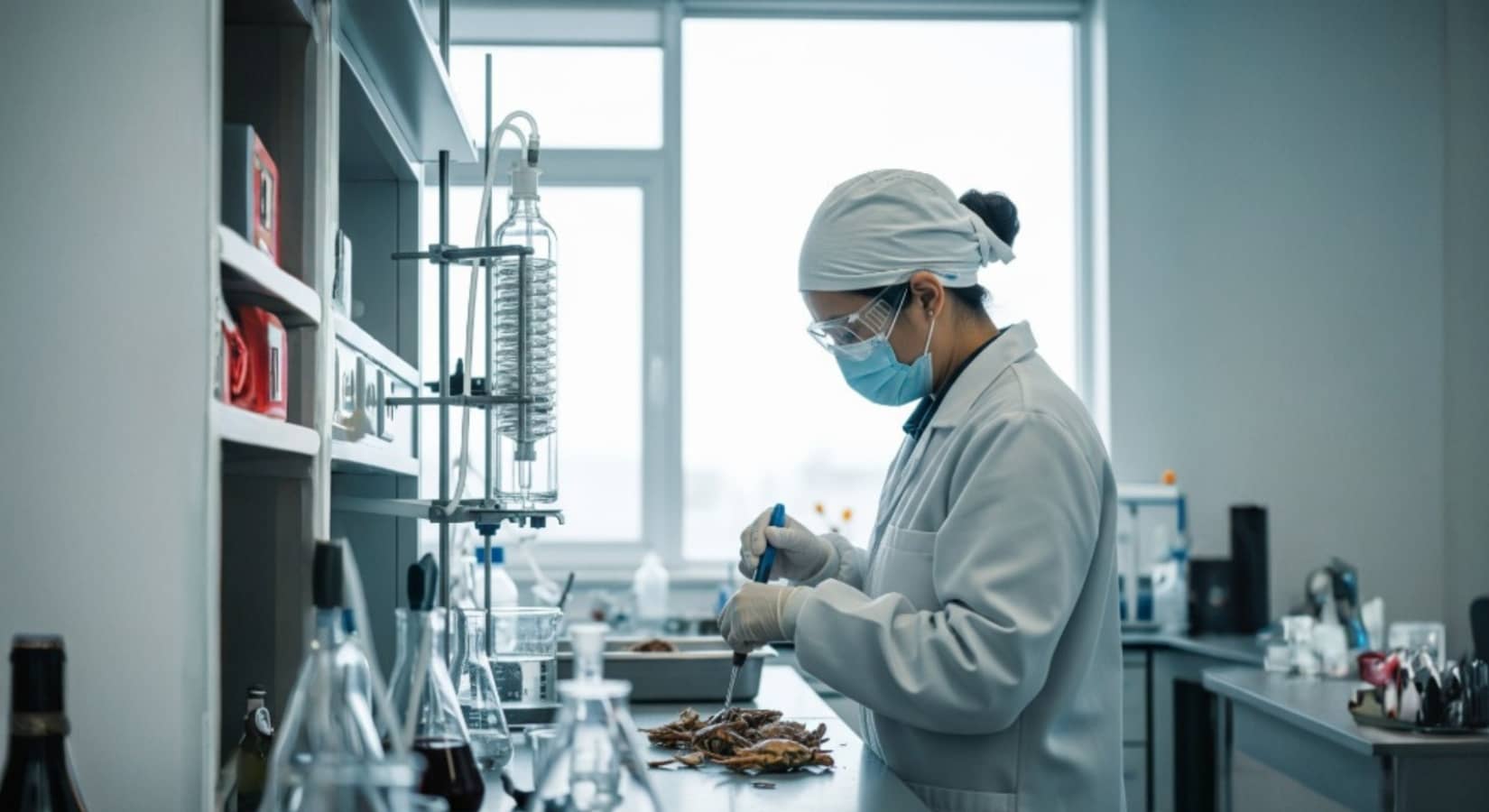
Sources of Chitosan: Crustacean Connection
Most of the commercially available chitosan is produced by processing crustacean shells, such as the shells of shrimp, crabs, and lobsters. They create chitin based exoskeletons, which act like body armor for their entire lives.
After these animals are processed for food, their shells are the main source of material to obtain chitosan.
Crab Shells: The Premium Source
Crab shells are the richest and preferable source of chitin to be used for the processing of chitosan. Various species make up this supply:
Shells of snow crab, Chionoecetes opilio, contain 20 to 30% of chitin on a dry shell weight basis, which is an excellent raw material. The cold water in which these crabs reside is believed to produce a higher quality chitin, attributed to a slower rate of growth and therefore denser, more ordered polymer structures.
High quality chitin comes, among others, from king crab (Paralithodes camtschaticus) shells, mostly from Alaska. Such large crustaceans also produce a lot of shell waste during processing, and each animal provides considerable amounts of chitin rich material.
Many chitosan manufacturer operations focus on these premium sources because they consistently deliver superior raw materials for pharmaceutical and food grade applications.
The shells of the blue swimming crab (Portunus pelagicus) provide a more accessible supply in some areas. These crabs are heavily trapped for their meat, resulting in abundant shell waste available for chitosan production.
Red crab and other species also serve as global chitin containing raw material suppliers with slightly varying traits depending on their living environment and biological function.
Shrimp Shells: The Volume Leader
The shrimp processing has produced a large amount of shell waste that makes up about 40 to 50% of the total shrimp body weight. It is interesting to note that this solid waste has a 15 to 20% content of chitin and would be a good source for the production of chitosan.
The world’s shrimp industry churns out millions of tons each year, forming a consistent supply of raw material.
Various shrimp species added varying characteristics of chitin:
- The quality of chitin from Tiger shrimp shells is superior with high levels of purity.
- White shrimp shells are available to meet demand consistently.
- Contribution of pink shrimp shells in chitosan production to produce at a regional level.
Lobster Shells: The Luxury Source
Lobster shells are not as plentiful as crab or shrimp shells, but they generate top quality chitin. The robust and thick crustacean exoskeleton of a lobster produces chitin of higher molecular weight and crystallinity.
Nevertheless, the availability of lobster shells is scarce, and they are more a boutique supplier than a heavy producer.
The Process of Transformation: From Waste to Wonder Material
The conversion of crustacean shells to chitosan is a series of manipulating chemical processes in which the raw chitin is altered to the more versatile and usable polymer. This is a scientific as well as an environmental success story.
Fresh On Time Seafood, as an experienced chitosan supplier, has perfected these transformation processes over nearly two decades to ensure consistent quality output.
Step 1: Shell Preparation and Cleaning
The process starts with an attentive selection and handling of crustacean shells. Shells, in particular those at seafood processing plants, are cleaned intensively to eliminate any remaining meat, proteins, and other organics.
This first washing step is important in order to guarantee the chitosan’s final quality. The shells are usually rinsed in water and mechanically cleaned to remove impurities.
Mild detergents or enzymatic cleaners may be used in some facilities to help clear all protein deposits. The washed shells are then dried and crushed to desired particle sizes for further processing.
Step 2: Demineralization (Removing Calcium Carbonate)
Crustacean shells also contain high amounts of calcium carbonate (CaCO₃) and calcium phosphate (Ca₃(PO₄)₂), which need to be extracted prior to chitin isolation.
Conventional demineralization is normally obtained by treatment of these ground shells with cold dilute hydrochloric acid (HCl).
The acid solution will dissolve the mineral portion and thus leave the organic chitin matrix untouched.
The parameters of the process (acid concentration, temperature, and duration) are supposed to be critical to complete mineral removal and to preserve the molecular structure of chitin. This process can wash away 95 to 98% of the mineral content, resulting in purified chitin.
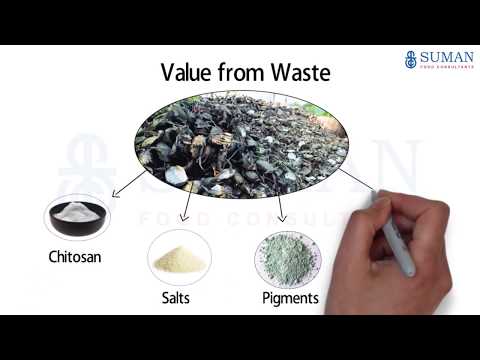
Step 3: Deproteinization (Removing Proteins)
The next stage is the removal of naturally entrapped protein on the chitin. This process of deproteinization is known and is performed with alkaline solutions, normally sodium hydroxide (NaOH), which degrades and solubilizes the protein bodies.
The base treatment has several purposes:
- Dissolves protein structures through hydrolysis
- Strips pigments that color the shell
- Starts the incomplete transformation of chitin into chitosan
- Kills microorganisms to sterilize the material
The temperature and concentration are two key parameters in this process. The removal efficiency of protein increases at higher concentrations, but it is also possible to degrade the chitin by taking a temperature too high.
Sometimes the process is performed at 80 to 100°C for a few hours.
Step 4: Deacetylation (Turning Chitin into Chitosan)
Deacetylation of chitin to chitosan is the last and the most important step. This eliminates acetyl groups (CH₃CO) off the chitin molecule so that an amino group (NH₂) remains to build into what becomes the features of chitosan.
Deacetylation is accomplished by reaction treatment of ground shells with concentrated sodium hydroxide (usually 40 to 50% NaOH) at high temperatures (100 to 160°C).
The method of treatment is responsive to the degree of deacetylation desired and may take from a few hours to several days.
The properties of chitosan are dependent on its degree of deacetylation (DD):
- Low DD (50 to 70%): Possesses more chitin like features
- Medium DD (70 to 85%): Balanced solubility and functionality
- High DD (85 to 95%): Increased soluble in vivo and activity
Other Sources: A new chitosan horizon
Crustacean exoskeleton is the predominant source of chitosan today. Nevertheless, scientists and producers have become increasingly aware of the characteristic properties of the material and the various possible applications.
The new insight has motivated the systematic exploration for alternative resources of a rapidly developed market demand. The search for alternative sources is also aimed at preventing the sector’s high dependence on seafood waste as the main raw material.
Fungal Chitosan: The Microbial Alternative
Some fungi synthesize chitosan in their cell walls and could be a potential source of non crustacean chitosan. Chitosan can be fermented by Mucor rouxii, Rhizopus oryzae, Aspergillus niger, and other species of fungi.
Fungal chitosan offers several advantages:
- Consistent quality: Controlled fermentation for uniform characteristics of the product.
- No allergens: No crustacean proteins that could cause allergic reactions.
- Scalable production:The facility can produce year round, regardless of access to seafood.
- Tailored properties: Chitosan of definite properties can be prepared by doing the fermentation conditions.
Yet, the fungal chitosan is only a minute fraction of overall level production because of the much more costly and less powerful crustacean approach.
Insect Chitosan: The Sustainable Future
With an increasing interest in insect farming as a source of protein production, insect exoskeletons could emerge as a potential source of chitin and chitosan.
Farmed insects such as crickets and mealworms possess chitin containing exoskeletons, which can be transformed into chitosan.
However, most established chitosan manufacturer operations still rely on traditional crustacean sources due to proven quality and processing efficiency. Insect chitosan has several sustainability benefits:
- Less environmental impact: Insects use less water and land compared to conventional livestock.
- Short gestation time: Rapid reproduction cycles: Insects have shorter generation times, providing more frequent harvests.
- Waste reduction: Utilizes waste from insect protein production.
- Automation: Insect farming can be highly automated and controlled.
Squid Pen Chitosan The Cephalopod Contribution
The waste gladius (pen) from squid processing contains β-chitin of a separate crystalline type from α-chitin in crustacean shells. This β-chitin can be converted into chitosan having distinctive characteristics. Squid derived chitosan characteristics:
- Higher solubility: Higher solubility of chitosan is obtained using β-chitin structure
- Other mechanical properties: Unique texture and film formation due to difference in mechanical properties
- Special applications: Especially suitable for cosmetic and pharmaceutical usages
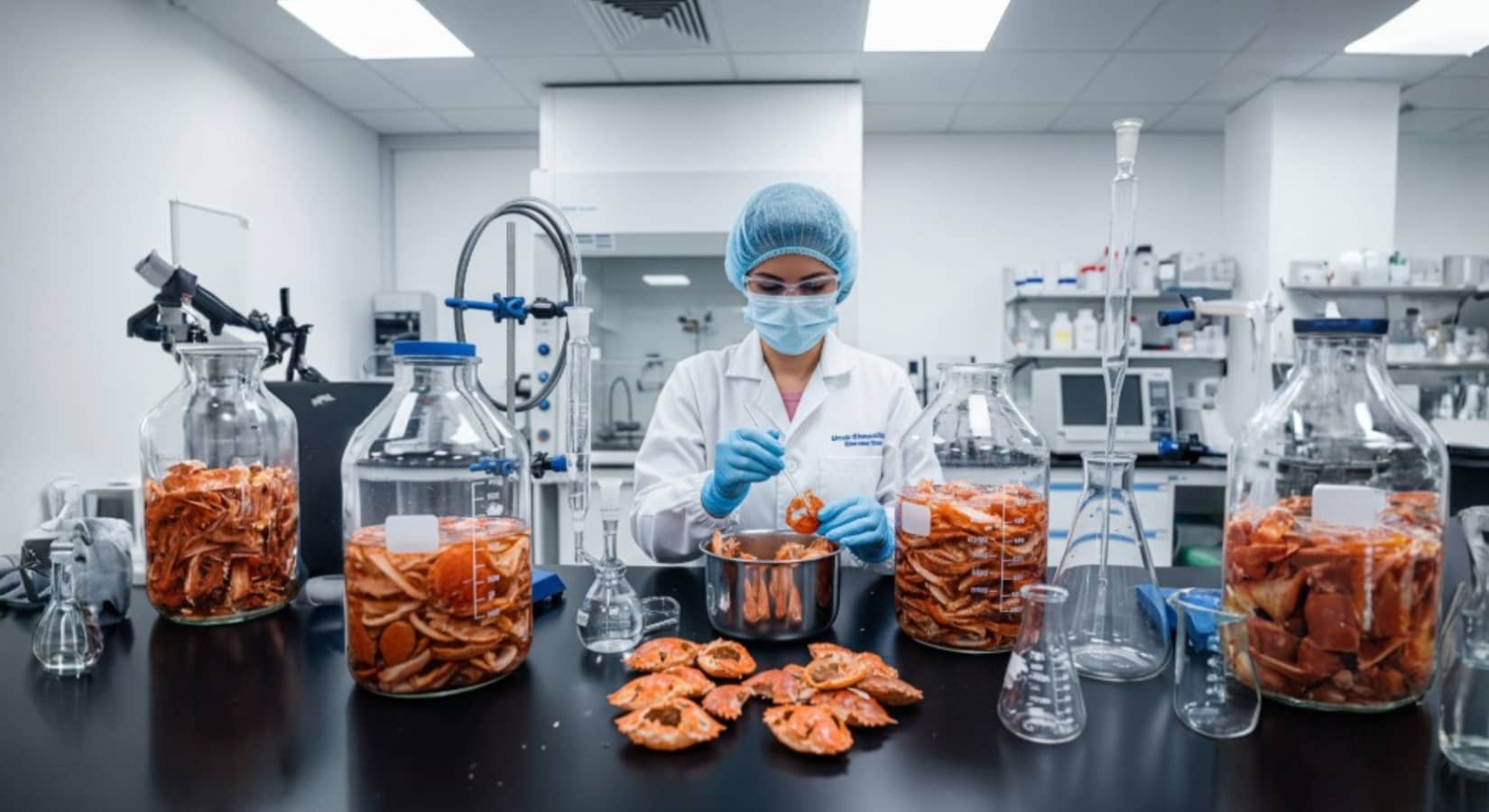
The Upcycle: Beyond Sustainability Designing for Abundance
The extraction of chitosan from crustacean shells is perhaps the best industrial example of upcycling in the seafood business. This reclamation is seen as a way to turn waste to wealth with a value added multi use product.
Environmental Impact and Sustainability
Up to 6 to 8 million tons of shell waste are produced annually by the fishery industry. This waste poses important environmental issues if not properly managed:
- Landfill burden: Shell waste takes up significant landfill space
- Decomposition issues: Shells can take years to decompose, which is problematic when it comes to good waste management.
- Odor and pest sanitation concerns: Inadequately contained shell waste can generate pest problems and sanitation issues.
- Economic loss: good materials just thrown away instead of being made to use.
These mitigation efforts address several issues through chitosan processing:
- Waste streams reduced: Utilizes 100% of shell waste
- Economic merit: Translates waste into money making substances
- Resource efficiency: Transforms waste into valuable materials
- Contribution to Circular Economy: Proves resource cycling efficacy
Economic Benefits of Upcycling
The economic value of seafood waste and the development of the chitosan industry:
Direct Economic Impact:
- The chitosan global market is more than $15 billion annually
- Generates extra income for fish processors
- Generates jobs in processing and manufacturing
- Reduces waste disposal costs
Indirect Economic Benefits:
- Provides for the development and research in biotechnology
- Enables innovation in sustainable materials
- Contributes to green chemistry initiatives
- Promotes sustainable business practices
Regional Examples of Successful Upcycling
From local seafood waste. The following are examples of regions that have developed a strong chitosan industry that is based on local waste of seafood:
- Asia Pacific: Indonesia, Thailand, Vietnam These countries in this region have taken advantage of the large seafood processing sector to become significant producers of chitosan.
These countries process millions of tons of crustacean shells per year, establishing value added seafood chains while utilizing seafood resources.
- North America: Alaska’s crab fishery creates large amounts of waste shells, which are converted to high quality chitosans. The cryogenic habitat also can produce thicker, more valuable materials with enhanced properties.
- Europe: Processors in Northern Europe have been investing in crab and shrimp shell processing, with a whiff of value added play, namely into pharmaceuticals and cosmetics.
Working as a reliable chitosan supplier in these global markets requires understanding regional quality standards and maintaining consistent supply chains across different continents.
Conclusion: Chitosan’s Remarkable Journey
The story of chitosan is one of the best success stories of waste to wealth. Previously, the shells of crabs, shrimp, and lobsters were discarded as waste in the seafood processing industry.
Now, with the help of scientific ingenuity and machinery found within factories, these waste shells have become something unique, a game changing biopolymer.
This biopolymer now has wide ranging applications across sectors such as healthcare, food processing, agriculture, and many industrial uses.
The conversion of abandoned marine byproducts to resourceful, high value material showcases how forward thinking engineering can lead to more sustainable solutions.
In the current climate of a growing realization of global environmental problems and accelerating demand for sustainability, the production of chitosan illustrates how industries can extract value from the environment while preserving it.
With ongoing progress in chitosan production technology, discovery of new chitosan sources, and broadened chitosan applications, this remarkable biopolymer will contribute more to our sustainable future.
Chitosan embodies the power of understanding nature’s ways as a path for new applications to industry and environmental value, from the enthusiastic use of leftover crustaceans to dramatic materials science advances.
As we peer into the future of materials, chitosan’s transformation from trash to treasure reminds us of the potential for sustainable production and waste remediation.
The achievement of the chitosan industry shows that by virtue of creative talents, scientific knowledge, and environmental concern, we can turn a day’s waste into a day’s treasure and build a world of delights for all!
FAQ
What is chitosan made from?
Chitosan is made from chitin, a natural polymer found in the exoskeletons of crustaceans such as crabs, shrimp, and lobsters. Industries convert this seafood waste into valuable biopolymer through a deacetylation process.
How is chitosan extracted from crustacean shells?
Producers extract chitosan through four main steps:
- Cleaning and drying the shells
- Demineralizing with acid to remove calcium
- Deproteinizing with alkaline solutions
- Deacetylating the chitin to produce chitosan
Why are crab shells considered the premium source of chitosan?
Crab shells contain 20–30% chitin, and cold-water species like snow crab yield dense, high-quality chitin. They also produce abundant shell waste, making them both effective and sustainable sources.
What is the purpose of demineralization in chitin extraction?
Demineralization removes calcium carbonate and other minerals from shells using dilute hydrochloric acid (HCl). This step ensures pure chitin without damaging its molecular structure.