
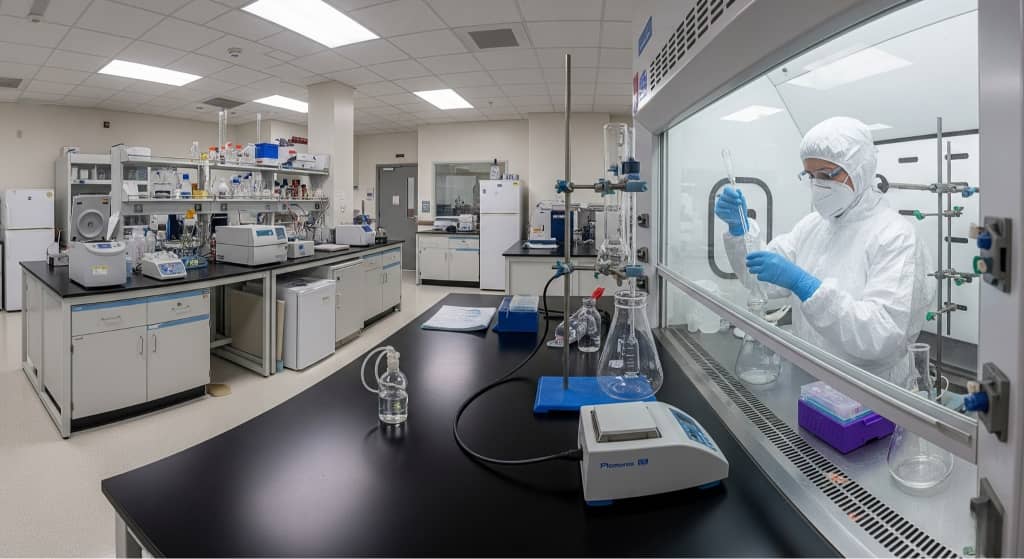
Chitin to chitosan, a major challenge is the deacetylation, a keystone in converting to chitosan, one of the most interesting sustainable biomaterials nowadays.
This method has been widely studied in various areas such as agriculture, food packaging, pharmaceuticals, and biomedicine owing to the fact that it can convert the unusable natural polymer into an available form.
Chitosan does not exist naturally in its helpful form. No, it’s made out of chitin, the fibrous stuff that is the natural world’s structural material.
Chitin is the second most common natural biopolymer, following only cellulose, and is found in crustacean shells, insect exoskeletons, and fungal cell walls.
As a commercially available, naturally abundant biopolymer, raw chitin possesses the same problem, it is still largely insoluble in water as well as most organic solvents, which restricts its applications effectively.
The deacetylation action goes to correct this issue by taking out the acetyl groups from the structure of chitin.
More specifically, it transforms the N-acetyl-D-glucosamine into D-glucosamine, changing the material’s physico-chemical properties drastically. Such chitosan becomes soluble in acidic media and is acquired by biocompatible and bioactive properties.
Fresh On Time Seafood, as a professional chitosan supplier, knows for a fact that deacetylation is the most important when it comes to the degree of deacetylation required for a particular application.
Upon deacetylation, the molecular structure experiences significant rearrangement, which facilitates solubility and interactions with biological systems.
The resultant product is very reactive and has functional groups and can be fabricated into diverse structures such as films, gels, fibers, and nanoparticles as a function of its molecular weight and degree of deacetylation.
This approach is in line with the principles of sustainable chemistry, wherein biowaste streams are transformed into something useful.
Founded by Bintarna Tardy in 2004, Fresh On Time Seafood is a respected international processor and supplier of quality seafood and chitosan products produced from crab shelsl.
Our sustainable and disruptive solution is applied across multiple industries, from food to healthcare, cosmetics, agriculture, and water treatment. We are dedicated to providing quality, value, and reliability and keeping the needs of our customers first.
Chitin is just the raw material, deacetylation is the key that unlocks chitin’s commercial potential. However, without this chemical alteration, chitin would not only be structurally resistant but also a commercially inert material.
It becomes a biodegradable natural polymer called chitosan through deacetylation, which is renewable and environmentally friendly, in line with the circular economy.
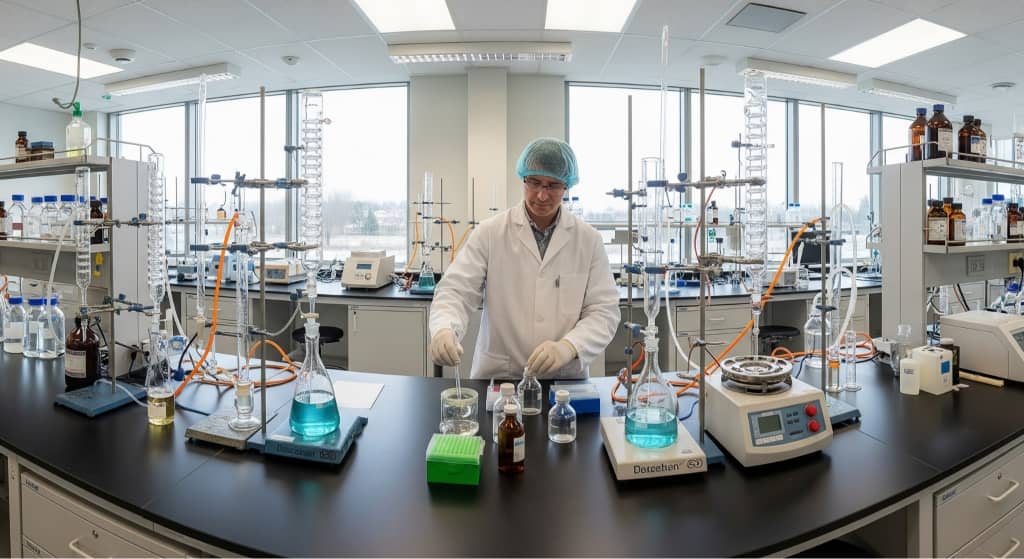
Understanding the Deacetylation Process
Deacetylation is the basic chemical process to transform chitin into chitosan. It is such a conversion that converts a stiff, biologically inactive polymer into a biologically active, versatile material that finds application in a wide diversity of industries.
Step by Step: How NaOH Transforms Molecular Structure
Chitin’s rigid structure comes from:
- Sugar chains: N-acetylglucosamine units (like Lego blocks)
- Strong bonds: β-glycosidic links (nature’s superglue)
- Armor plating: Acetyl groups form a waterproof shield
These structural fragments are acetylated and have been found to greatly impact the behavior of the polymer.
The acetyl groups form a crystalline, hydrophobic structure with extensive hydrogen bonding, providing rigidity and insolubility in all but the most polar solvents.
The deacetylation reaction in question is aimed at removing these acetyl groups, substituting them with hydrogen atoms in such a way that it generates a free amine group.
This conversion converts N-acetylglucosamine to D-glucosamine, now officially converting the polymer classification to chitosan.
Industrial deacetylation is usually carried out using a concentrated alkaline solution, such as sodium hydroxide, at high temperature (90–160°C) for 1–5 h. Hydrolysis of the acetyl groups from the polymer backbone is enhanced by the alkaline environment.
The deacetylation level defines the degree of deacetylation, it influences the properties of the final chitosan.
Significance of Deacetylation
Solubility Enhancement
Raw chitin is chemically stable but is almost inert in solubility. The deacetylized chitosan is soluble in a mild acidic medium, which can be easily processed into different shapes of products, such as:
- Gels
- Films
- Coatings
- Fibers
- Nanoparticles
Bioactivity Development
Deacetylation introduces amine groups, which are a source of important bioactive features of chitosan.
These groups may enable interactions with metal ions, proteins, pharmaceuticals, and other molecules, and consequently, the potential application of this type of functionalized complex in biomedicine, environmental, and agricultural fields is broadened.
From this, it is clear that whenever you are considering choosing a chitosan supplier, you should take care to see that their deacetylation potential is able to cope with the degree of deacetylation necessary for your specific application.
What does deacetylation do to DNA?
Deacetylation removes acetyl groups from histone proteins, causing them to bind DNA more tightly. This compacts the chromatin structure and limits gene expression. It plays a key role in gene regulation and cell differentiation.
Property Optimization
The deacetylation degree is a main control switch of chitosan properties. A larger DDA value usually makes the resulting modified starches more water soluble, while a smaller DDA value may confer other favorable characteristics.
Moreover, greater deacetylation frequently results in higher antimicrobial properties and bioadhesive capacities. Gelation, viscosity, and film formation properties also vary with DDA content, which further influences processing demands of industrial end users.
Being a professional chitosan manufacturer, Fresh On Time Seafood invests in advanced analysis instruments for accuracy control of the deacetylation process condition.
Application Customization
Controlled deacetylation allows production of chitosan best suited for targeted application:
High DDA (>85%): Chitosan of DDA over 85% is acceptable from pharmaceutical and medical points of view due to increased solubility and bioactivity.
Medium DDA (70-85%): Material of DDA of 70% to 85% is suitable for agricultural, food processing, and environmental applications.
<iframe width=”560″ height=”315″ src=”https://www.youtube.com/embed/xO_rQgpVeZM?si=5BJBcbM7kwNr9F82″ title=”YouTube video player” frameborder=”0″ allow=”accelerometer; autoplay; clipboard-write; encrypted-media; gyroscope; picture-in-picture; web-share” referrerpolicy=”strict-origin-when-cross-origin” allowfullscreen></iframe>
Commercial Deacetylation Methods
Scaling up chitosan production starts with the preparation of raw materials according to established procedures. The crustacean shells are cleaned, demineralized, and deproteinized to obtain relatively pure chitin.
Chitin, in slurry form, is subjected to 40 to 50 percent sodium hydroxide treatment, preferably at 90° to 120°C, for times as dictated by specifications.
The processing parameters would need to be finalized based on the required DDA levels. Increased reaction times and elevated chemical levels uniformly escalate deacetylation extent.
After the reactor is washed and neutralized and the produced powder product is dried and ground, it provides the final powder products, in which it is ready for its use or further processing.
Quality control checks are DDA testing during production at predetermined intervals to verify against target specifications. The DDA can be determined by a number of different techniques, including:
- Spectroscopic methods (infrared or nuclear magnetic resonance)
- Titration methods
What does deacetylation do to DNA?
Deacetylation removes acetyl groups from histone proteins, causing them to bind DNA more tightly. This compacts the chromatin structure and limits gene expression. It plays a key role in gene regulation and cell differentiation.
What are the benefits of deacetylation?
Deacetylation helps maintain genome stability and regulates gene activity. By tightening DNA around histones, it prevents unwanted gene expression. This process is important for development, aging, and responses to environmental signals.
Fresh On Time Seafood, as a leading chitosan manufacturer, is equipped with an online monitoring system to monitor important deacetylation parameters online.
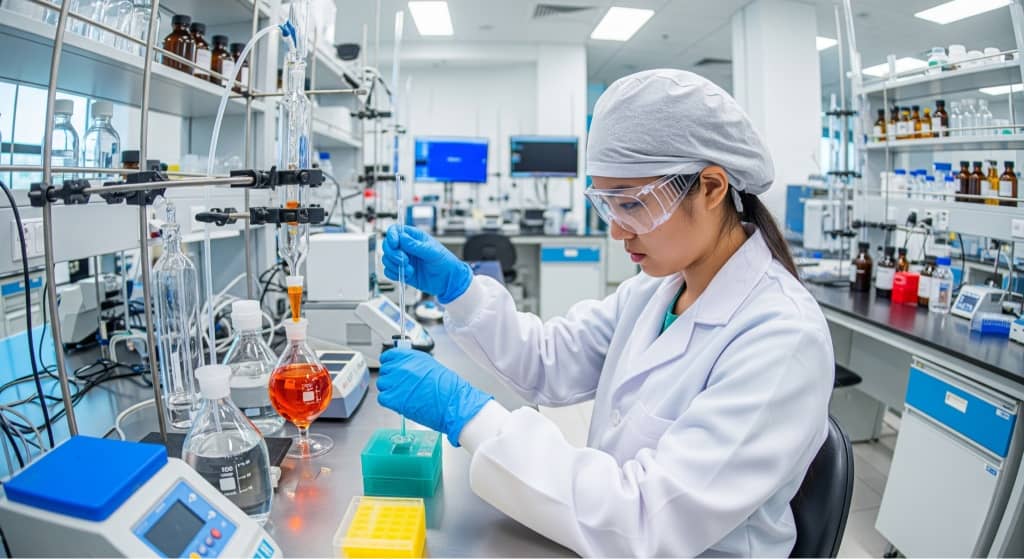
Structural Comparison: Chitin versus Chitosan
Despite their similar backbone structures, chitosan and chitin have very different chemical properties, levels of reactivity, and applications. These disparities mainly depend on the extent of the deacetylation during processing.
Molecular Structure Differences
Chitin is a polymer of N-acetyl-D-glucosamine linked by β-glycosidic linkages. The acetylated amino sugar units form a highly crystalline, hydrophobic structure with extensive hydrogen bonding, imparting rigidity and insolubility.
Chitosan results from incomplete deacetylation of chitin, where some N-acetyl-D-glucosamine units are converted to D-glucosamine units. This results in a copolymer of deacetylated and acetylated units in proportion to processing.
Chitosan is a derivatized form of chitin, rather than a completely different polymer. Its characteristics are a direct result of the degree of acetyl group loss from deacetylation.
Degree of Deacetylation Impact
DDA quantifies the extent of deacetylation as a fraction of the total number of sugar units in the polymer chain. It determines most key features of chitosan, such as
- Solubility
- Bioactivity
- Molecular weight
- Chemical activity
Application Categories by DDA Range:
High DDA (85% and up) Such materials are highly soluble in dilute acids and have significantly superior bioactivity. Applications include:
- Pharmaceutical formulations
- Biomedical equipment
- Tissue engineering
- Drug delivery systems
- Wound care materials
- Surgical materials
Medium DDA (70–85%) These chitosans are moderately soluble materials with excellent film forming and chelation of metals. Typical applications include:
- Agricultural products (biopesticides and seed treatments)
- Water treatment systems for heavy metal removal
- Biodegradable packaging materials
Important Note: Chitosan with a DDA of higher than 85% is used for pharmaceutical purposes because of solubility and purity.
Chitosan with 70-85% DDA is generally used in the field of agriculture and environment, as these properties are more adaptable to application requirements
.
The DDA controlled parameters are not limited to solubility but also affect other properties (viscosity, molecular weight, and chemical reactivity).
This offers manufacturers a means to tailor its material properties with respect to desired applications, rendering chitosan one of the most flexible biopolymers in current materials science.
Environmental and Sustainability Considerations
Deacetylation has a key role in waste valorization, and in particular for the large quantities of crustacean shells produced by seafood industry facilities. Typically such materials would need to be disposed of in a landfill or in the oceans.
The value added of converting waste shells (waste), in the form of chitin, through deacetylation into chitosan outweighs the cost of disposal.
This strategy has multiple environmental implications, such as
- Reduction of seafood industry processing waste
- Production of bio based materials with a lower environmental impact than their synthetic counterparts
- Waste utilization according to circular economy principles
These advantages position deacetylation as an environmentally preferred technology consistent with sustainability goals and principles of green chemistry.
Conclusion
Deacetylation serves as the necessary technology that makes it possible to convert chitin wastes into chitosan.
This chemical conversion provides an opportunity to convert an abundant but underemployed biological resource into a valuable product applicable across many industries.
The method supports green chemistry goals by producing value added products from waste streams.
As the research still conducts deacetylation procedures and new applications in chitosan, this technology may well remain in the frame of materials science and sustainable production.
The basic idea is still simple, strip out some of the molecular groups, and the material properties change dramatically.
This shift facilitates the conversion of biological waste to resources and is a driver for the industry and environmentally friendly at the same time, which is effective “green” sustainable chemistry.
FAQ
What Is Deacetylation?
Deacetylation is the chemical process that removes acetyl groups from chitin to convert it into chitosan. This step increases solubility and gives chitosan its bioactive properties.
Why is particle size important in chitin processing?
Smaller shell particles increase surface area, speeding up chemical reactions. However, extremely fine particles can cause filtration issues during processing.
Why is chitin not usable in its natural form?
Chitin is insoluble and chemically inert, limiting its applications. Deacetylation makes it soluble and reactive, transforming it into a useful biomaterial.
What are common applications based on DDA levels?
- High DDA (>85%): Used in pharmaceuticals, wound care, and drug delivery.
- Medium DDA (70–85%): Applied in agriculture, packaging, and environmental cleanup.
Why is deacetylation important for sustainability?
It transforms seafood waste (crustacean shells) into valuable materials, reducing landfill use. This supports circular economy goals and replaces synthetic materials with eco-friendly alternatives.